
Tempered vs. Laminated Glass: A Side-by-Side Comparison for Building Safety and Design
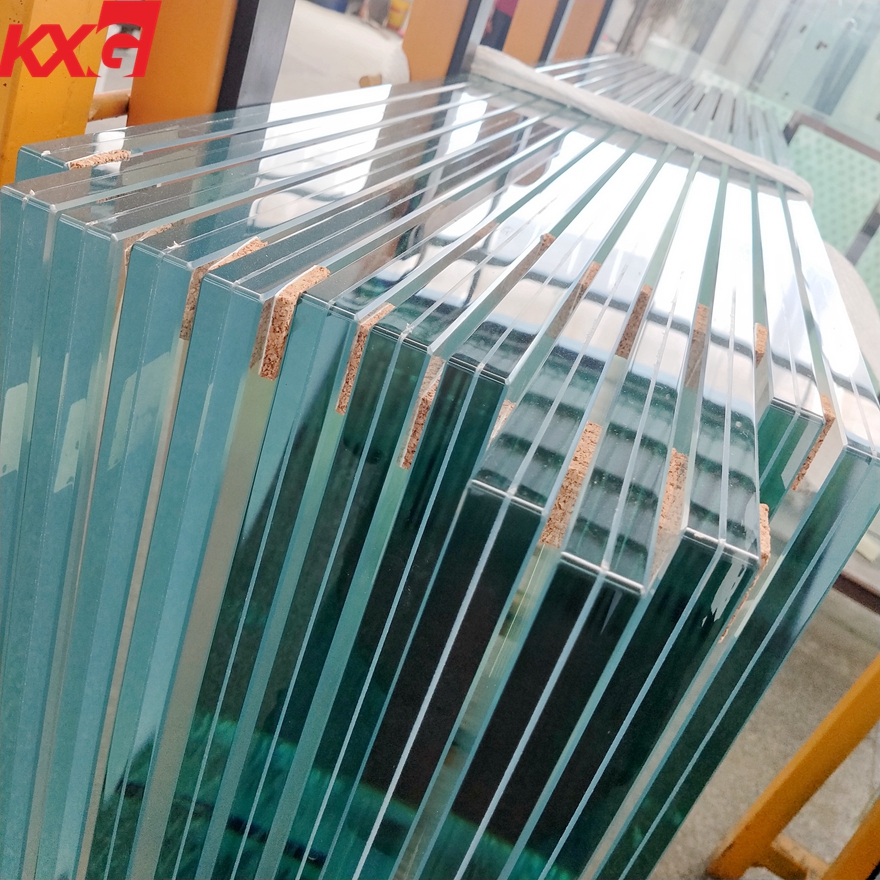
When a building project needs safety glass, the specification usually narrows to two processed glass products: tempered glass and laminated glass. Both can carry safety-glazing certifications, but they address different failure risks. Tempered glass is a monolithic heat-treated glass that breaks into obtuse-angle grain particles instead of pointed shards. Laminated glass is an interlayer-based assembly designed to remain coherent after impact, making it relevant for glass retention, impact resistance, and typhoon-prone facades.
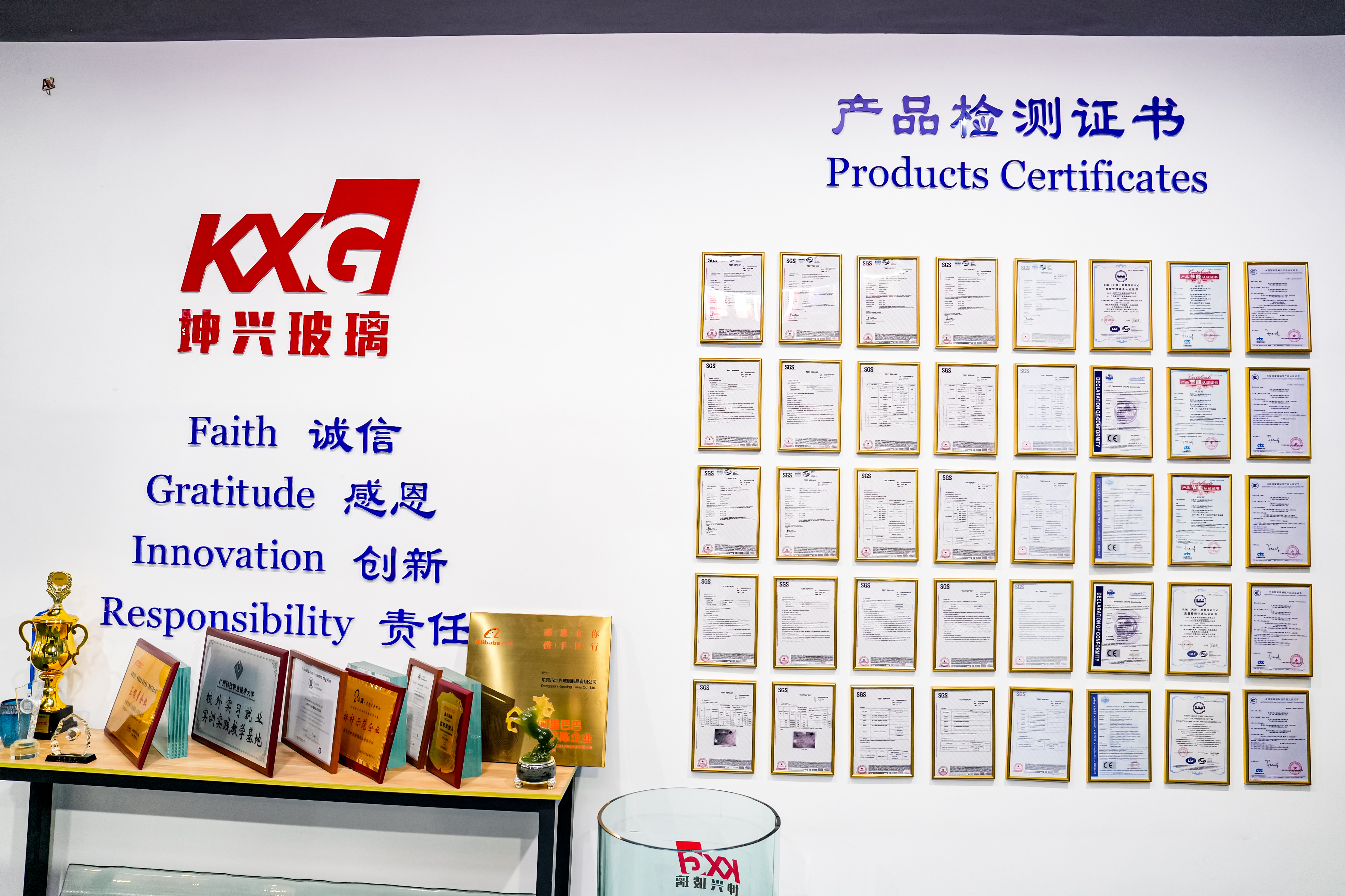
This side-by-side guide is written for buyers who are in the evaluation-to-execution stage and need a supplier-level comparison. It uses the actual product data, certifications, and project references of Kunxing Glass, which operates as KXGLASS/KXG on export markets. KXG produces tempered glass, laminated glass, and insulated glass in one factory, so the comparison below reflects realistic supply options rather than generic theory. The KXG website displays the current product and certificate lines.
Why This Comparison Matters Before Execution
One of the most common specification mistakes is treating the term safety glass as a single product category. A tempered glass door and a laminated glass skylight can both be considered safety glazing, yet their visible failure is very different. For door glass, injury prevention usually means a safe break pattern; for high-level or overhead glass, the priority is keeping broken glass from falling out of the opening.
Product comparisons can also be misleading if they only quote strength while ignoring how the pane will react after breakage. Tempered glass offers high mechanical strength before failure; laminated glass offers a post-breakage behavior that monolithic glass cannot provide unless it is laminated. Therefore, the decision should start from the risk the building is trying to control.
Industry Background: Tempered Glass Demand in 2026
The global market for tempered glass reached USD 112.21 billion in 2024 and is projected to reach USD 159.27 billion by 2033, according to Grand View Research. Asia Pacific accounted for 59.9% of the 2024 market, and China alone exported about USD 3.58 billion in safety glass in 2024, covering more than 647 million square meters. Plain tempered glass, the type used in a wide range of buildings, represented 64.5% of market revenue.
This context matters because it shows how much of modern construction still relies on monolithic tempered glass. At the same time, a growing number of curtain wall and skylight specifications call for laminated or tempered-laminated units where structural retention is critical.
At factory level, KXG reports an annual output of 1,825,000 square meters of single tempered glass, 365,000 square meters of laminated glass, and 730,000 square meters of insulated glass. That range explains why this comparison includes options for monolithic glass, interlayered glass, and combinations.
Tempered Glass under the Microscope
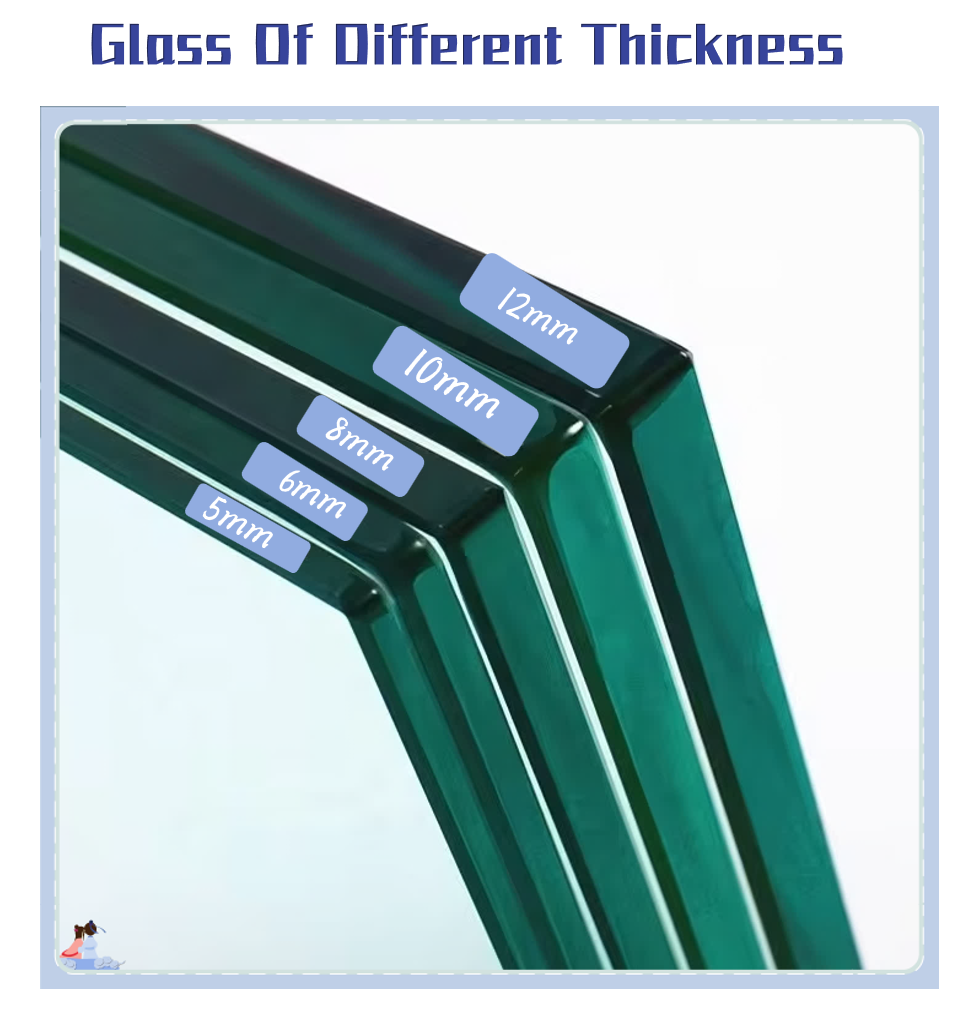
Tempered glass is produced by heating glass and then rapidly cooling it to create surface compression. KXG serves builders with monolithic tempered glass in 4mm, 5mm, 6mm, 8mm, 10mm, 12mm, 15mm, 19mm, 22mm, and 25mm thicknesses. This makes it possible to specify thin interior door glass or thick commercial door and wall glazing from one product line.
The KXG parameter list for tempered glass includes an intensity of 150 MPa, surface stress of 95 MPa, a thermostability range of 250 to 320 degrees C, and a broken state described as obtuse-angle grain. These numerical indicators give engineers a starting point for sizing glass for wind load and human impact.
For European export, EN 12150-1 is a common basis for thermally toughened safety glass. KXG states it meets CE/EN12150 and, in addition, carries SGS test reports for heat-soaked float toughened glass in 6mm, 10mm, and 15mm. KXG product notes also acknowledge that self-destruction can sometimes occur, which is one reason buyers should consider laminated alternatives when post-breakage retention is critical.
Laminated Glass under the Microscope
Laminated glass should not be treated as a single formula. It consists of two or more glass panes bonded together with an interlayer. KXG supplies two common interlayer families: PVB and SGP.
For PVB laminated glass, KXG lists glass thickness combinations of 5mm+5mm, 6mm+6mm, and 8mm+8mm, with PVB interlayer options of 0.38mm, 0.76mm, 1.14mm, or 1.52mm. This product is used in the building industry for situations where the pane should retain broken fragments and continue to act as a barrier.
For SGP laminated glass, KXG product parameters highlight high mechanical strength, good impact resistance, and anti-typhoon capability. SGP is often chosen in large facades, skylights, or regions with wind-borne debris. The SGP line has been supported by a Declaration of CPD Conformity based on EN ISO 12543-2-2011 and EN ISO 12543-3-2011.
Laminated glass can also be thermally toughened before lamination. KXG’s product ecosystem includes laminated tempered combinations, insulated glass, bent tempered glass, and curved tempered SGP laminated glass. For designers, this means a laminated structure does not have to give up the benefits of tempered glass; it can combine them.
Step-by-Step: Choosing One Glass Format for a Specific Opening
The decision moves quickly when the glazing risk is made explicit. Use the following sequence as a practical basis for comparison.
- Identify the failure scenario. If the project is a door, low window, or lobby partition, the risk is usually a person striking the glass. Tempered glass breakage into obtuse-angle grains reduces the chance of serious cuts, and KXG can supply door tempered glass and window tempered glass across the 4 to 25mm thickness range.
- Assess the consequence of glass falling out. If the pane is overhead, at a high storey, or in a typhoon and wind-borne debris zone, structural retention should guide the decision. Laminated glass, preferably a tempered-laminated assembly, is more aligned with that risk.
- Select glass thickness and interlayer. For PVB laminates, KXG offers 5mm+5mm, 6mm+6mm, and 8mm+8mm glass with 0.38mm to 1.52mm PVB interlayers. If high mechanical strength, good impact resistance, and anti-typhoon behavior are required, specify SGP laminated glass.
- Check certifications against the destination market. Tempered glazing should be checked against EN 12150 for the EU, AS/NZS 2208 for Australia, SGCC/ANSI Z97.1 for the US market, and the relevant local building code. For SGP laminated glass, KXG also has EN ISO 12543-2/-3 conformity support.
- Plan OEM customization and quality control. KXG offers OEM/ODM services with customization options for size, thickness, and logo. Quality control includes 100% testing, and after-sales support includes a 5-year return and replacement policy.
- Align logistics with project timing. The KXG minimum order for processed glass is 100 square meters, production lead time is 15 to 20 days, and delivery can be quoted as EXW, FOB, or CIF. Pre-shipment testing is used as acceptance before release.
Field Use Cases: How the Two Choices Appear in Actual Building Projects
The KXG product family has been successfully used by OEM clients in Australia, by end-user clients in the Middle East, and by a municipal-government client in Southeast Asia. The following examples show why one project may need monolithic glass, laminated glass, or a combination of both.
Vietnam: Airport Curtain Wall and Decorative Wall
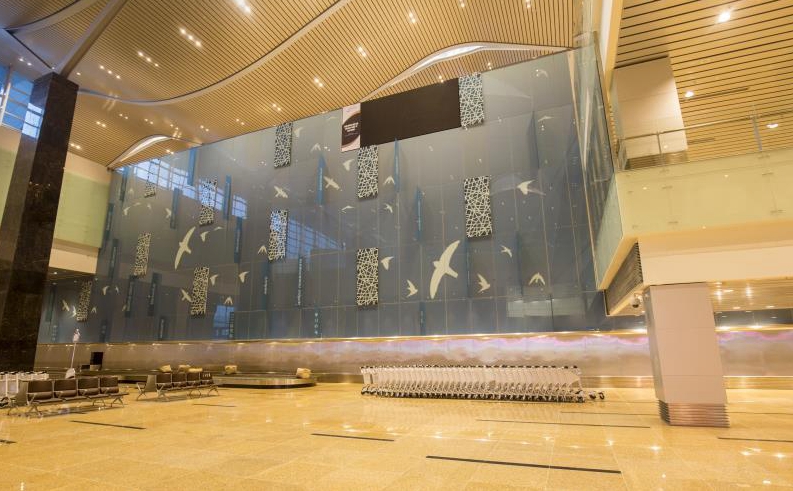
In a municipal-government project in Vietnam, KXG supplied glazing for an airport curtain wall and decorative wall. The project involved 200 to 500 units and was intended for a 3 to 10 year service life. Reported results included color stability of at least 85%, high safety performance, high durability, and a Mohs hardness rating of 6. The project scope included tempered, laminated, silkscreen printing, and insulated glass products.
Australia: Mall Building Walls and Build-to-Rent Facades
An OEM client in Australia applied KXG glass to mall building walls, build-to-rent facades, and curtain walls. The project involved 500 to 1000 units and a 2 to 5 year service duration. The project outcome highlighted stable structural performance of at least 85%, a relative energy-saving ratio of no less than 65%, noise reduction of 60% to 70%, and an aesthetic facade appearance. The related product scope included tempered, laminated, insulated glass and mirror products.
United Arab Emirates: Mall Skylights and Curtain Walls
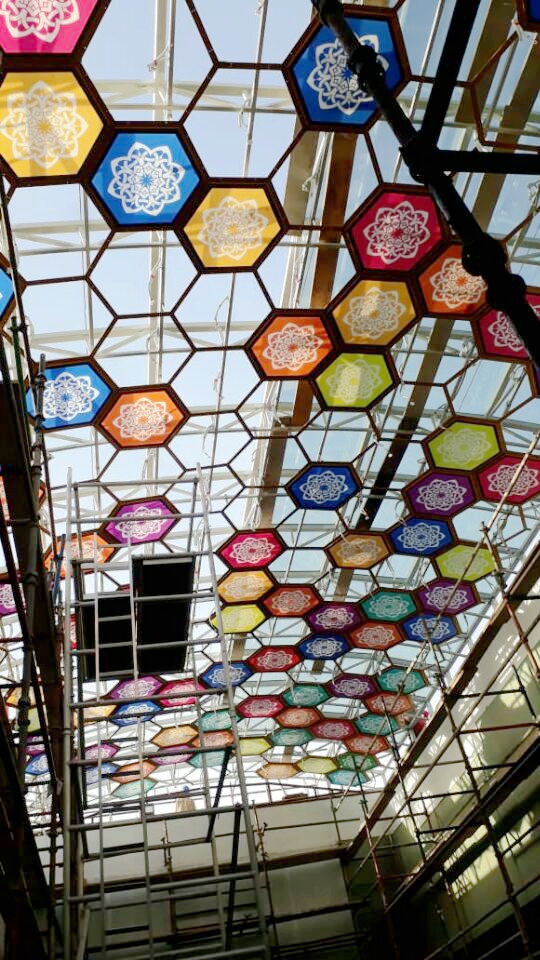
An end-user project in the UAE used 100 to 200 KXG units for mall skylights and curtain walls, with an intended 2 to 10 year service life. Safety performance reached no less than 3500 Pa in the completed glazing system, and the outcome highlighted color stability, weather resistance, energy saving, and insulation. The project also used silkscreen printed glass for decorative and privacy-protecting purposes.
Tempered vs. Laminated Glass Side-by-Side Comparison Table
| Attribute | Tempered Glass | Laminated Glass |
|---|---|---|
| Basic construction | Monolithic heat-treated glass | Two or more glass plies bonded with PVB or SGP interlayer |
| KXG thickness or configuration range | 4mm, 5mm, 6mm, 8mm, 10mm, 12mm, 15mm, 19mm, 22mm, 25mm | PVB: 5mm+5mm, 6mm+6mm, 8mm+8mm; PVB interlayers 0.38mm, 0.76mm, 1.14mm, 1.52mm; SGP laminated glass also available |
| Breakage behavior | Breaks into obtuse-angle grain particles | Interlayer construction helps retain broken glass plies after impact |
| Mechanical reference values | Intensity: 150 MPa; surface stress: 95 MPa | SGP line states high mechanical strength and good impact resistance |
| Thermal stress behavior | Thermostability listed at 250 to 320 degrees C | Thermal values are application-specific; can be combined with insulated glass for heat and noise insulation |
| Anti-typhoon relevance | No interlayer to provide structural retention after breakage | SGP laminated glass states anti-typhoon capability |
| Typical architectural uses | Door and window glass, partitions, commercial facades, storefronts | Skylights, curtain walls, high-level glazing, typhoon-prone facades |
| Certification references | CE/EN12150, AS/NZS 2208, SGCC ANSI Z97.1, SGS heat-soak reports | SGCC acknowledgement for laminated safety glass; CPD declaration for SGP under EN ISO 12543-2/-3 |
| Custom and OEM flexibility | OEM/ODM options include size, thickness, and logo | OEM/ODM options include size, thickness, and logo |
Frequently Asked Questions
Does KXGLASS hold safety certifications for both tempered and laminated glass?
Yes. KXG meets international standards such as CE/EN12150, SGCC ANSI Z97.1, AS/NZS 2208, and Chinese 3C for relevant processed glass products. Its SGCC acknowledgement covers tempered and laminated safety glass, and the SGP laminated line has a CPD conformity declaration based on EN ISO 12543-2-2011 and EN ISO 12543-3-2011. The project specification should still be checked against the destination country’s building code.
Can KXGLASS customize both glass types through OEM or ODM?
Yes. KXG provides OEM and ODM production services with customization options covering product size, thickness, and logo. The factory reports a monthly capacity of 100,000 square meters, and the after-sales policy includes 5 years return and replacement. In practice, an OEM buyer can place tempered glass and laminated glass requirements with the same factory and request edge finishing, interlayer type, and product marking according to drawings.
Does choosing monolithic tempered glass always reduce project cost?
Not necessarily. A monolithic tempered glass unit may use fewer processing steps, but if the installed location is overhead, at a high level, or exposed to strong wind, a laminated or tempered-laminated unit can reduce replacement and safety risk. Compare the total project impact of the glass format, including certification, edge work, interlayer type, testing, and future liability, instead of making a decision based on unit price alone.
What lead time and order terms should a buyer expect for custom building glass?
KXG normally quotes a production lead time of 15 to 20 days, with a 100 square meter minimum order for processed glass. Delivery can be arranged as EXW, FOB, or CIF; acceptance is based on pre-shipment testing; payment is typically 30% TT in advance with the balance paid before shipment. Orders below USD 10,000 are handled on a full payment basis. The next step is to send drawings and target market details to KXG so the thickness, interlayer, certification, and lead time can be confirmed for the specific project.
Making the Tempered vs. Laminated Decision
Tempered glass and laminated glass are complements rather than substitutes in many building envelopes. Choose monolithic tempered glass when human-impact safety, a compact thickness range, and thermal stress resistance are the primary concerns. Choose laminated glass when the building needs glass retention, impact resistance, or typhoon resilience. For demanding facades, specify tempered laminated glass to use both mechanisms in one unit.
For an execution-ready comparison, request a thickness-and-interlayer quote from KXGLASS for the specific window, door, or skylight drawing. This avoids over-relying on generic strength comparisons and makes the final selection traceable to a real production line.
Start with a project review. KXGLASS supplies tempered glass, laminated glass, and insulated glass for building projects. Send drawings and target markets to Kevin at kevin@kxglass.com or WhatsApp +86 1353500092849 to confirm thickness, interlayer, certification, and lead time.
Download the KXG company brochure to review the production and certificate overview first.
Have Questions or Need More Details?
Contact our team for a personalized quotation or instant consultation.
Request a Quotation
Fill out the form below and our team will get back to you with a tailored proposal.
WhatsApp Direct Chat
Prefer to chat in real-time? Message us on WhatsApp for instant assistance & quick answers.
- Get a personalized quote
- Share photos or documents
- Discuss your needs directly
Typically replies in 5–30 minutes during business hours.