
Tempered vs. Laminated Glass: Choosing the Right Safety Glass for Facades and Skylights
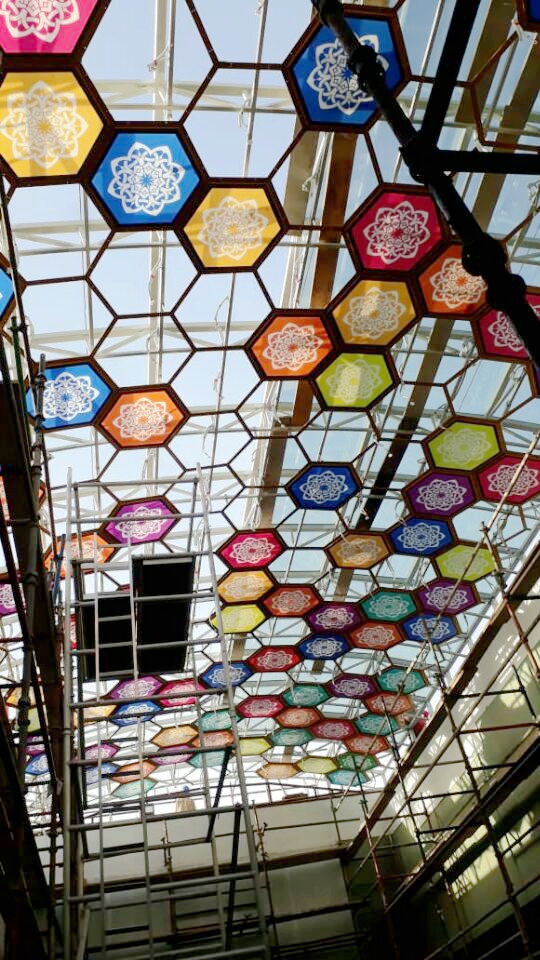
A mall skylight project: overhead glazing is where post-breakage retention, not raw impact strength, decides the specification.
Tempered versus laminated is a failure-mode decision, not a strength contest. Tempered glass — produced in 4 mm to 25 mm thicknesses with 95 MPa surface stress, 150 MPa intensity and 250–320°C thermostability — is the cost-effective default for vertical glazing where a fractured pane is contained by its frame. Laminated glass, built with 0.38–1.52 mm PVB or SGP interlayers, is the specification of record wherever a broken pane must stay in its opening: overhead skylights, impact-prone elevations, and typhoon-exposed curtain walls.
This head-to-head guide is written for specifiers and procurement managers who have to defend that choice in a submittal. It compares the two products on the parameters that actually drive performance, frames the decision around project-specific risks such as rim-seal security, anti-typhoon resilience, and the occasional self-destruction of thermally toughened glass, and closes with a decision path, a comparison table and the questions buyers ask most often.
Problem Definition: Two Products, Two Different Failure Modes
Both tempered and laminated glass are sold as "safety glass" and both appear in tender documents under the same heading. They fail differently, and that difference — not a headline strength number — is what a facade or skylight specification has to resolve.
Tempered glass, also written as toughened glass, is strengthened by heating and rapid quenching until the surfaces carry a compressive stress. KXGLASS product data records 95 MPa surface stress, 150 MPa intensity, and a thermostability range of 250–320°C. When it eventually breaks, it fractures into obtuse-angle grain rather than sharp shards — the behaviour that EN 12150-1:2015 codifies when it defines fragmentation into small pieces of 5 mm or less. The pane itself, however, leaves the opening. In service, the safety of a tempered assembly therefore depends on the frame and the edge engagement — the rim seal — holding the shattered panel in place long enough for the area beneath to be cleared.
Laminated glass answers a different question. Two or more glass panes are bonded to a PVB or SGP interlayer, and after fracture the interlayer continues to carry the fragments. The panel stays in its opening, keeps a residual barrier against wind, rain and falling objects, and reduces the risk of glass dropping onto the space below. That behaviour is what matters for a skylight over an atrium, a canopy above an entrance, or a curtain wall in a cyclone region.
Two further risks shape the choice. The first is self-destruction: KXGLASS product data records self-destruction of tempered glass as occurring sometimes — a low-frequency characteristic of thermally toughened glass, and the reason heat soak treatment is specified for critical panels. The second is overhead exposure: glass installed above head height must be judged on what it does after it breaks, not only on how much load it carried before it broke.
Industry Background: Why the Choice Is Under More Scrutiny in 2026
Tempered glass remains the volume product of the construction glazing market. Grand View Research estimates the global tempered glass market at USD 112.21 billion in 2024, projected to reach USD 159.27 billion by 2033, with Asia Pacific holding a 59.9% revenue share in 2024 on the back of urbanisation and infrastructure spending. Plain tempered glass alone accounted for 64.5% of market revenue in 2024, largely because construction and automotive applications consume it at scale.
Supply is concentrated in the same region. According to UN Comtrade, China's exports of safety glass (tempered) reached approximately USD 3.58 billion in 2024, covering more than 647 million square meters. For specifiers, that means most facade and skylight packages will be sourced from a market where tempered glass is close to a commodity — and where supplier differentiation sits in processing control, interlayer options and certification rather than in the base material.
EN 12150-1:2015 provides the European baseline for thermally toughened soda-lime silicate safety glass: it defines the fragmentation characteristics of a correctly tempered pane and thermal resistance up to 300°C. Any tempered glass offered for a European facade project is expected to sit inside that definition, which is why fragmentation testing and heat soak records are usually requested alongside a submittal. In practice, that is what separates an EN 12150 tempered glass offer from a generic pane.
KXGLASS — the trading identity of Dongguan Kunxing Glass Co., Ltd., a glass deep-processing manufacturer founded in 1995 in Dongguan, Guangdong Province, China — operates inside that framework. The company exports roughly 70% of its output to Australia, America, Asia and Europe, and reports annual output of 1,825,000 m² of single tempered glass, 365,000 m² of laminated glass and 730,000 m² of insulated glass, supported by a 20-engineer R&D team.
Detailed Solution: What Each Glass Type Actually Delivers
Tempered glass: uniform strength, contained breakage
Tempered glass is the reference product for vertical glazing, and the strength parameters explain why: 150 MPa intensity, 95 MPa surface stress and thermostability between 250°C and 320°C, with a break pattern that fractures into obtuse-angle grain. KXGLASS produces it in 4 mm, 5 mm, 6 mm, 8 mm, 10 mm, 12 mm, 15 mm, 19 mm, 22 mm and 25 mm thicknesses, which covers door and window glazing as well as heavy facade panels. Specifications that call for 6 mm, 10 mm, 12 mm or 19 mm tempered glass are all inside that range, as are custom cut tempered glass sizes produced to project dimensions.
The limitation is equally well documented. Tempered glass has no post-breakage retention, and self-destruction occurs sometimes. Heat soak treatment is the standard mitigation: finished panels are exposed to a controlled thermal cycle so that inclusions capable of triggering spontaneous breakage fail before the glass leaves the factory. Evidence of that control is verifiable — KXGLASS holds SGS test reports for 6 mm, 10 mm and 15 mm heat soaked float toughened glass under certificates GZIN1806033811CM, GZIN1806033816CM and GZIN1806033817CM-01, and its heat soak process oven is calibrated to BS EN 14179-1:2016 under report J18-117-R01-180903.
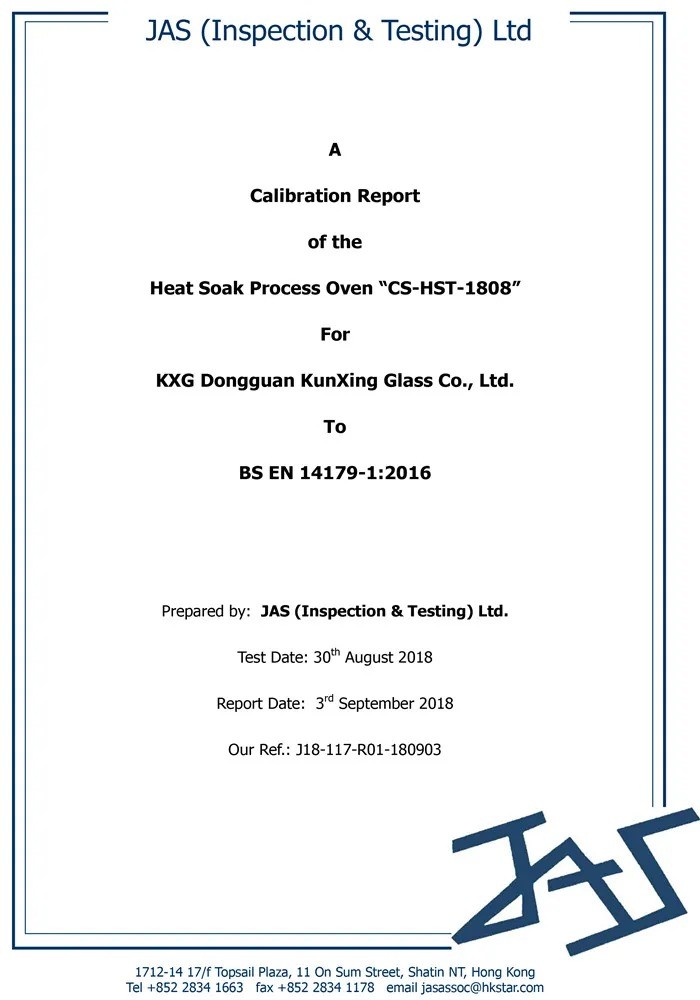
Documentation behind the heat soak claim: calibration of the heat soak process oven to BS EN 14179-1:2016.
Laminated glass: post-breakage retention by interlayer
Laminated glass trades the single monolithic pane for a bonded assembly. KXGLASS laminated glass is produced in 5 mm + 5 mm, 6 mm + 6 mm and 8 mm + 8 mm builds with PVB interlayers at 0.38 mm, 0.76 mm, 1.14 mm and 1.52 mm — the four interlayer gauges that dominate architectural glazing. Thicker interlayers increase stiffness and residual load capacity after fracture, which is why the choice between 0.38 mm and 1.52 mm PVB is a structural decision, not a cosmetic one.
Where wind, impact or cyclonic exposure dominates, SGP laminated glass is the higher-performing option. KXGLASS data describes SGP laminated glass as offering high mechanical strength, good impact resistance and anti-typhoon behaviour. The material route is documented: a Declaration of CPD Conformity for DuPont SentryGlas (SGP) was issued under certificate LBTC202006209S against EN ISO 12543-2:2011 and EN ISO 12543-3:2011.
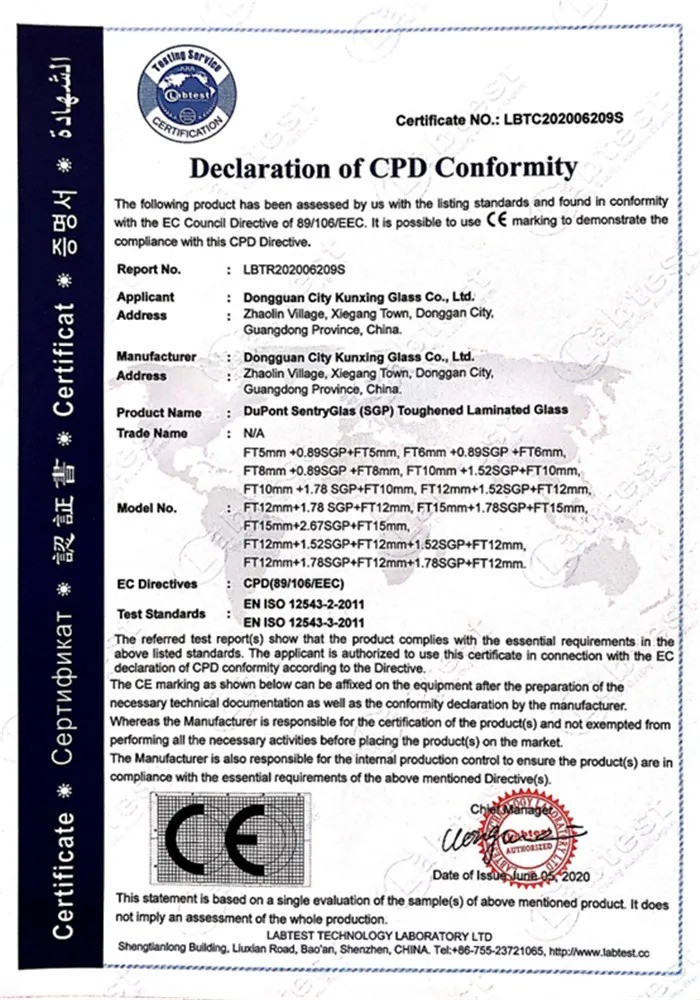
The laminated interlayer route, documented: CPD conformity for DuPont SentryGlas (SGP) against EN ISO 12543-2:2011 and EN ISO 12543-3:2011.
Tempered laminated glass and double glazed tempered assemblies
The two products are not mutually exclusive. Tempered laminated glass — a toughened outer pane bonded to a second pane through an interlayer — combines uniform strength with post-breakage retention and is the usual answer for sloped glazing, skylights with walk-on maintenance access, and high-exposure facades where both properties are demanded. In KXGLASS production this is the same laminated build (5 + 5 mm, 6 + 6 mm, 8 + 8 mm with 0.38–1.52 mm PVB or SGP) applied to heat soaked tempered panes.
Where thermal and acoustic performance also matter, double glazed tempered glass is built as insulated glass with 6A, 9A or 12A cavities, giving heat insulation, noise insulation and a lower self-weight for the building envelope. Design variants such as low-iron, tinted or frosted finishes change appearance and light transmission; they do not change the failure-mode logic that decides whether the assembly should be tempered, laminated, or both.
Step-by-Step Breakdown: A Seven-Step Specification Path
- Classify the mounting position. Overhead, sloped or walk-on glazing carries a fall risk that vertical facades do not. Vertical facades, doors and windows — including insulated tempered glass for window tempered glass and door tempered glass openings — sit in a different risk class.
- Define the required post-breakage behaviour. If the answer is "the panel may fall out once the area is cleared", tempered glass is adequate. If the answer is "the panel must remain in the opening", the specification moves to laminated or tempered laminated glass.
- Match thickness and build to the loads. Tempered panes are available from 4 mm to 25 mm; laminated builds run 5 + 5 mm, 6 + 6 mm and 8 + 8 mm with interlayers from 0.38 mm to 1.52 mm. Thickness selection follows wind load, panel size and deflection limits.
- Choose the interlayer. PVB covers standard laminated glazing. SGP is specified where high mechanical strength, impact resistance and anti-typhoon performance are required — typically cyclonic facades and overhead panels.
- Specify heat soak for tempered panes. Because tempered glass self-destructs sometimes, heat soak treatment converts that risk from a field failure into a factory rejection. The heat soak oven is calibrated to BS EN 14179-1:2016 and the resulting panes carry SGS test reports.
- Verify certification for the destination market. CE EN 12150, AS/NZS 2208 and SGCC (ANSI Z97.1-2009, CPSC 16 CFR 1201, CAN/CGSB 12.1) are the frameworks KXGLASS works within, alongside the BS 6206:1981 & AMD 8693:1995 impact test report GZHG1204010925FT for toughened glass.
- Validate the sample, then lock the programme. KXGLASS runs OEM/ODM production with customization of size, thickness and logo, a minimum order quantity of 100 sqm, 100% testing, and a 15–20 day lead time against a monthly capacity of 100,000 sqm.
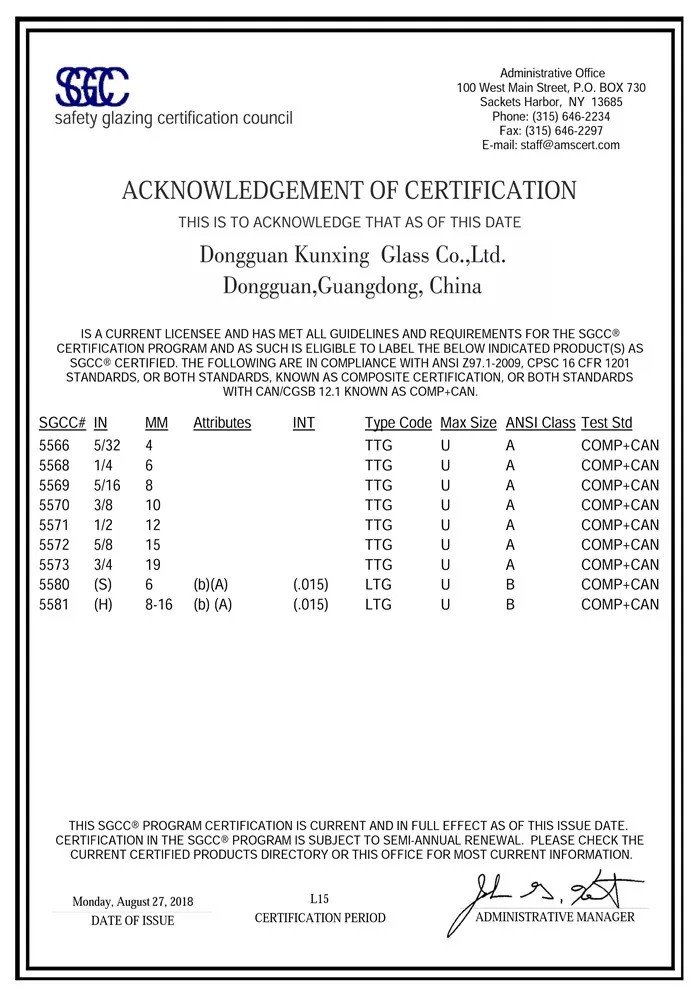
One certificate can cover both products: the SGCC acknowledgement lists tempered and laminated safety glass under ANSI Z97.1-2009, CPSC 16 CFR 1201 and CAN/CGSB 12.1.
Use Cases: Where the Decision Has Already Been Made
Three delivered project patterns show how the tempered-versus-laminated call plays out in practice.
Overhead skylight plus curtain wall — Middle East mall. An end-user project in the United Arab Emirates combined a mall skylight with curtain wall glazing across 100–200 units with a 2–10 year service horizon. The recorded results were high safety performance at ≥3500 Pa, colour stability of ≥85%, aesthetic appearance and long service life, with the highlights listed as high weather resistance, energy-saving insulation and aesthetic appeal. Skylight glazing under desert thermal cycling is the clearest case for laminated or tempered laminated construction over a monolithic tempered pane.
Build-to-rent facade and curtain wall — Australia. An OEM project in Australia covering a mall building wall plus build-to-rent facade and curtain wall delivered 500–1000 units over a 2–5 year duration, with stable structural performance of ≥85%, an energy saving ratio of 65% or higher, and noise reduction of 60%–70% for library-level silence. Its stated highlights were high safety performance, sound insulation, energy saving and ornamental appearance — the combination that double glazed tempered and laminated assemblies are specified to deliver.
Airport curtain wall and decorative wall — Vietnam. A municipal government client in Vietnam used safety glass across 200–500 units in an airport curtain wall and decorative wall application, with a 3–10 year duration. The project recorded colour stability of ≥85%, a safety rating of 5×, and durability at Mohs hardness 6, with the highlights described as high safety, artistic decoration, colour stability, energy saving and anti-glare.
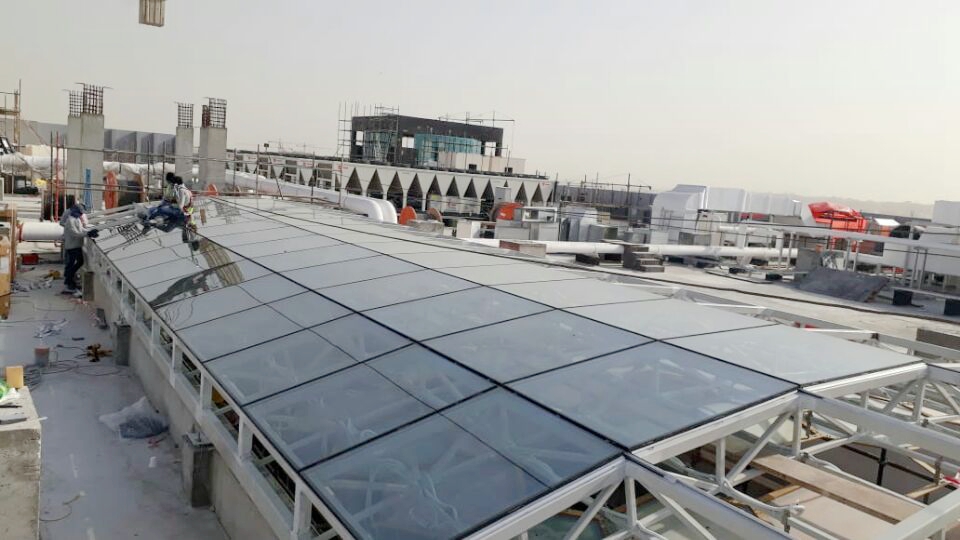
Curtain wall glazing on a Middle East mall project — vertical panels where tempered glass carries the load and the frame contains breakage.
Comparison Table: Tempered vs. Laminated Glass
| Decision factor | Tempered glass | Laminated glass (PVB) | Laminated glass (SGP) |
|---|---|---|---|
| Recorded strength parameters | 150 MPa intensity; 95 MPa surface stress | Build 5 + 5 mm, 6 + 6 mm, 8 + 8 mm; interlayer 0.38–1.52 mm | High mechanical strength; good impact resistance; anti-typhoon |
| Thermal performance | Thermostability 250–320°C | Interlayer-dependent (not quantified in product data) | Interlayer-dependent (not quantified in product data) |
| Break behaviour | Obtuse-angle grain; pane leaves the opening | Fragments retained on the interlayer; panel stays in the opening | Fragments retained; higher residual stiffness |
| Self-destruction | Sometimes; mitigated by heat soak treatment | Not recorded as a finished-product failure mode in product data | Not recorded as a finished-product failure mode in product data |
| Thickness / build range | 4, 5, 6, 8, 10, 12, 15, 19, 22, 25 mm | 5 + 5, 6 + 6, 8 + 8 mm with 0.38/0.76/1.14/1.52 mm PVB | Same build range with SGP interlayer |
| Certification route (KXGLASS) | CE EN 12150; AS/NZS 2208; SGCC; SGS reports for 6/10/15 mm heat soaked toughened glass; heat soak oven to BS EN 14179-1:2016 | SGCC (ANSI Z97.1-2009, CPSC 16 CFR 1201, CAN/CGSB 12.1) | CPD conformity for DuPont SentryGlas (SGP), EN ISO 12543-2:2011 and EN ISO 12543-3:2011 |
| Best fit | Vertical facades, doors, windows, contained breakage | Overhead skylights, canopies, impact-prone glazing | Cyclonic facades, high-exposure overhead panels |
| Cost structure | Fewer process steps; plain tempered glass held 64.5% of 2024 market revenue | Adds interlayer material and a lamination step | Higher-grade interlayer shifts the cost basis |
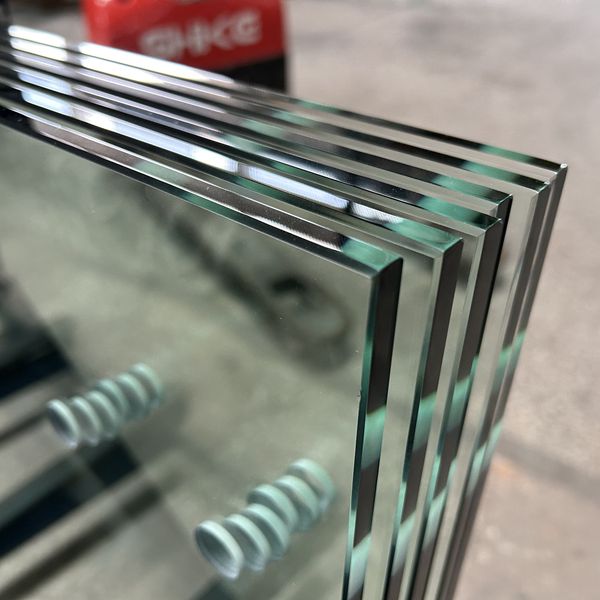
Edge condition and frame engagement — the rim-seal detail that determines how long a tempered pane stays in place after fracture.
Frequently Asked Questions
Does tempered glass have to meet EN 12150, and does laminated glass need separate certification?
Yes to both. EN 12150-1:2015 defines the fragmentation characteristics of thermally toughened soda-lime silicate safety glass — small pieces of 5 mm or less — together with thermal resistance up to 300°C, and it is the reference for the tempered component of a facade. Laminated assemblies are assessed under their own standards: KXGLASS holds a Declaration of CPD Conformity for DuPont SentryGlas (SGP) issued against EN ISO 12543-2:2011 and EN ISO 12543-3:2011 under certificate LBTC202006209S, plus an SGCC acknowledgement covering tempered and laminated safety glass under ANSI Z97.1-2009, CPSC 16 CFR 1201 and CAN/CGSB 12.1. KXGLASS products are also certified to CE EN 12150 and AS/NZS 2208.
Can a single supplier deliver both tempered and laminated glass for one facade package?
Yes. KXGLASS runs OEM/ODM production with customization of size, thickness and logo, covering tempered glass in 4–25 mm, laminated builds of 5 + 5 mm, 6 + 6 mm and 8 + 8 mm with 0.38–1.52 mm PVB or SGP interlayers, and insulated glass with 6A, 9A and 12A cavities for double glazed tempered facades. Monthly capacity is 100,000 sqm with 100% testing, which allows a mixed specification — tempered for vertical panels, laminated overhead — to be produced and shipped as one package rather than two.
Which option is more cost-effective for a large facade?
The cost drivers differ rather than one product simply being cheaper. Tempered glass requires fewer process steps and is the volume product — plain tempered glass accounted for 64.5% of global tempered glass market revenue in 2024 — so it typically carries the lower cost per square meter for vertical glazing where breakage is contained by the frame. Laminated glass adds interlayer material and a lamination step, and SGP is specified where high mechanical strength, impact resistance and anti-typhoon behaviour are required, which changes the cost basis again. The efficient specification is usually a mix: tempered for vertical panels, laminated or tempered laminated for overhead and impact-exposed areas.
Can we validate both products before placing a full order?
Yes. The minimum order quantity for KXGLASS production is 100 sqm, every panel is 100% tested, and the evidence pack is available before shipment: SGS test reports for 6 mm, 10 mm and 15 mm heat soaked float toughened glass, the SGCC acknowledgement for tempered and laminated safety glass, and the CPD conformity for SGP laminated glass. Reference projects in the Middle East, Australia and Vietnam can be reviewed alongside the certificates.
What lead time should we plan for, and what happens after delivery?
Standard production lead time is 15–20 days against a monthly capacity of 100,000 sqm, and KXGLASS provides a 5-year return and replacement after-sales policy. To start a project, send the panel schedule, thickness and build-up, interlayer type (PVB or SGP), and destination market so the correct certification route can be confirmed — then request a sample and quote for your first batch. Contact Kevin at kevin@kxglass.com or +86 13500092849, or review the full product and certification range at www.kxglass.com.
Conclusion: The Decision Path
Prioritise tempered glass when the glazing is vertical, when breakage will be contained by the frame, and when uniform strength and cost efficiency are the governing criteria. Its documented parameters — 150 MPa intensity, 95 MPa surface stress, 250–320°C thermostability — make it the right default for facades, doors and windows, and heat soak treatment under BS EN 14179-1:2016 calibration reduces the self-destruction risk that tempered glass carries.
Select laminated glass when the panel must retain structural integrity after fracture: overhead skylights, canopies, sloped glazing and impact-prone elevations. PVB at 0.38–1.52 mm covers standard architectural requirements; SGP is specified where high mechanical strength, impact resistance and anti-typhoon performance are written into the performance brief. Where both properties are demanded, tempered laminated glass in a 5 + 5 mm, 6 + 6 mm or 8 + 8 mm build delivers them together, and double glazed tempered units with 6A, 9A or 12A cavities add thermal and acoustic performance on top.
The failure mode decides, and it decides per opening — not per project. A well-specified facade usually contains both products, each placed where its post-breakage behaviour is the correct one.
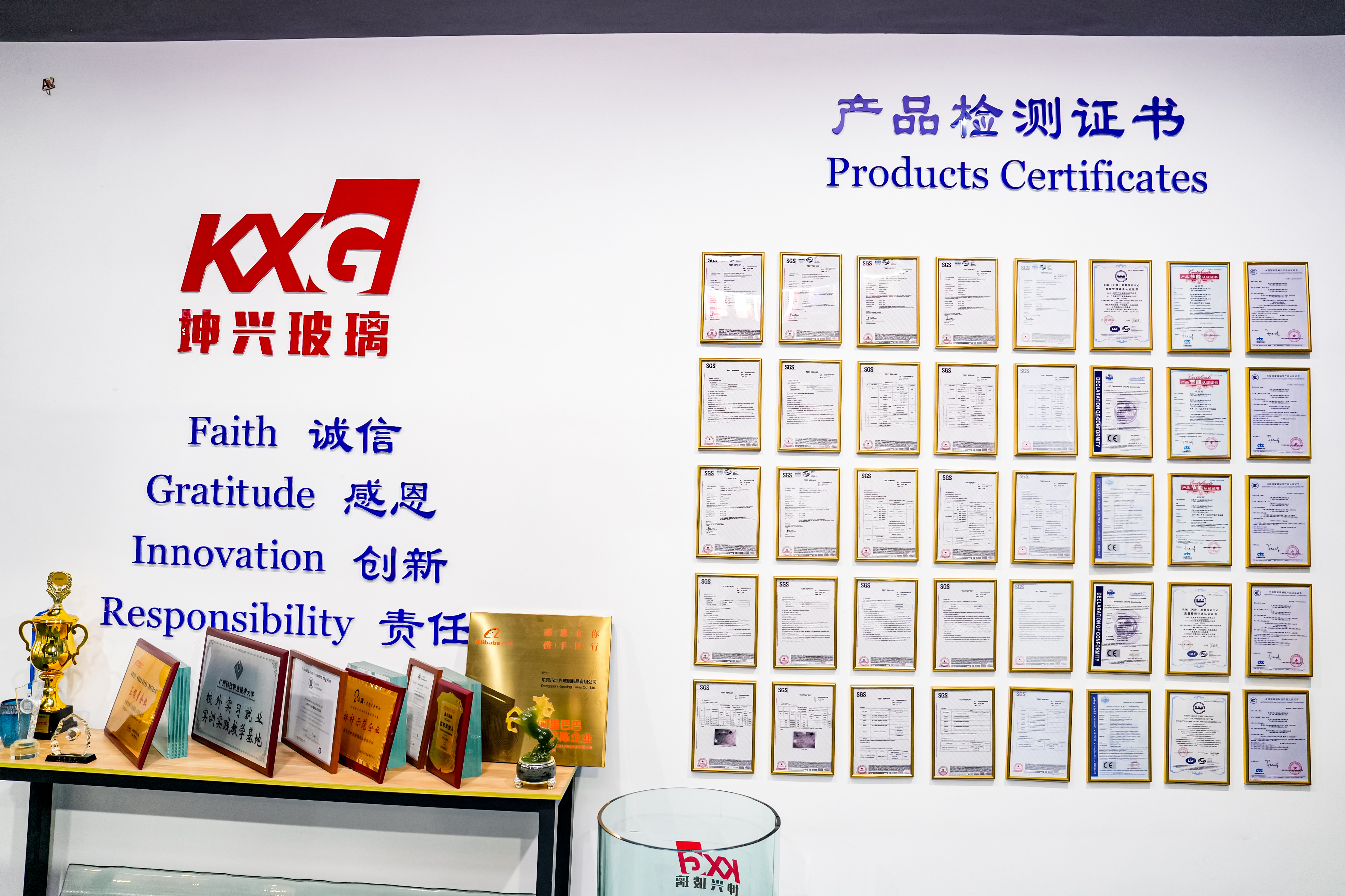
KXGLASS certificates and quality documentation — available for review before a specification is locked.
Specifying tempered, laminated or tempered laminated glass?
Send us your panel schedule and destination market. KXGLASS will confirm the correct thickness, interlayer and certification route, and arrange a sample and quote for your first batch. Buyer's catalogue and full specification pack are available below.
Download Product Catalogue Visit www.kxglass.comContact: Kevin | kevin@kxglass.com | Tel / WhatsApp: +86 13500092849 | No. 10, Jinchuan Road, Zhaolin, Xiegang Town, Dongguan City, Guangdong Province, China 523590
Have Questions or Need More Details?
Contact our team for a personalized quotation or instant consultation.
Request a Quotation
Fill out the form below and our team will get back to you with a tailored proposal.
WhatsApp Direct Chat
Prefer to chat in real-time? Message us on WhatsApp for instant assistance & quick answers.
- Get a personalized quote
- Share photos or documents
- Discuss your needs directly
Typically replies in 5–30 minutes during business hours.