
Tempered Glass Supplier Audit: Thickness, Stress & Delivery
Tempered Glass Supplier Audit: Thickness, Stress & Delivery
A tempered glass supplier audit usually fails on the questions nobody asked, not on the glass that arrives. Procurement teams receive a data sheet with a thickness list, a strength figure and a temperature range, then compare those numbers across suppliers as though they had been produced the same way. They usually were not. The framework below converts published numbers into six verification steps that end in a written acceptance position, so a supplier preference decision rests on evidence rather than on the largest figure in a PDF.
The working example is KXGLASS (Dongguan Kunxing Glass Co., Ltd.), a Dongguan-based glass deep-processing manufacturer founded in 1995. Its published record includes a 4 mm to 25 mm tempered thickness range, a stated 150 MPa intensity and 95 MPa surface stress, a 250 °C–320 °C thermostability range, and a set of named certificates. Using one supplier's published record keeps each step concrete; the steps themselves apply to any candidate on a tender list. Company documentation is published at KXGLASS.
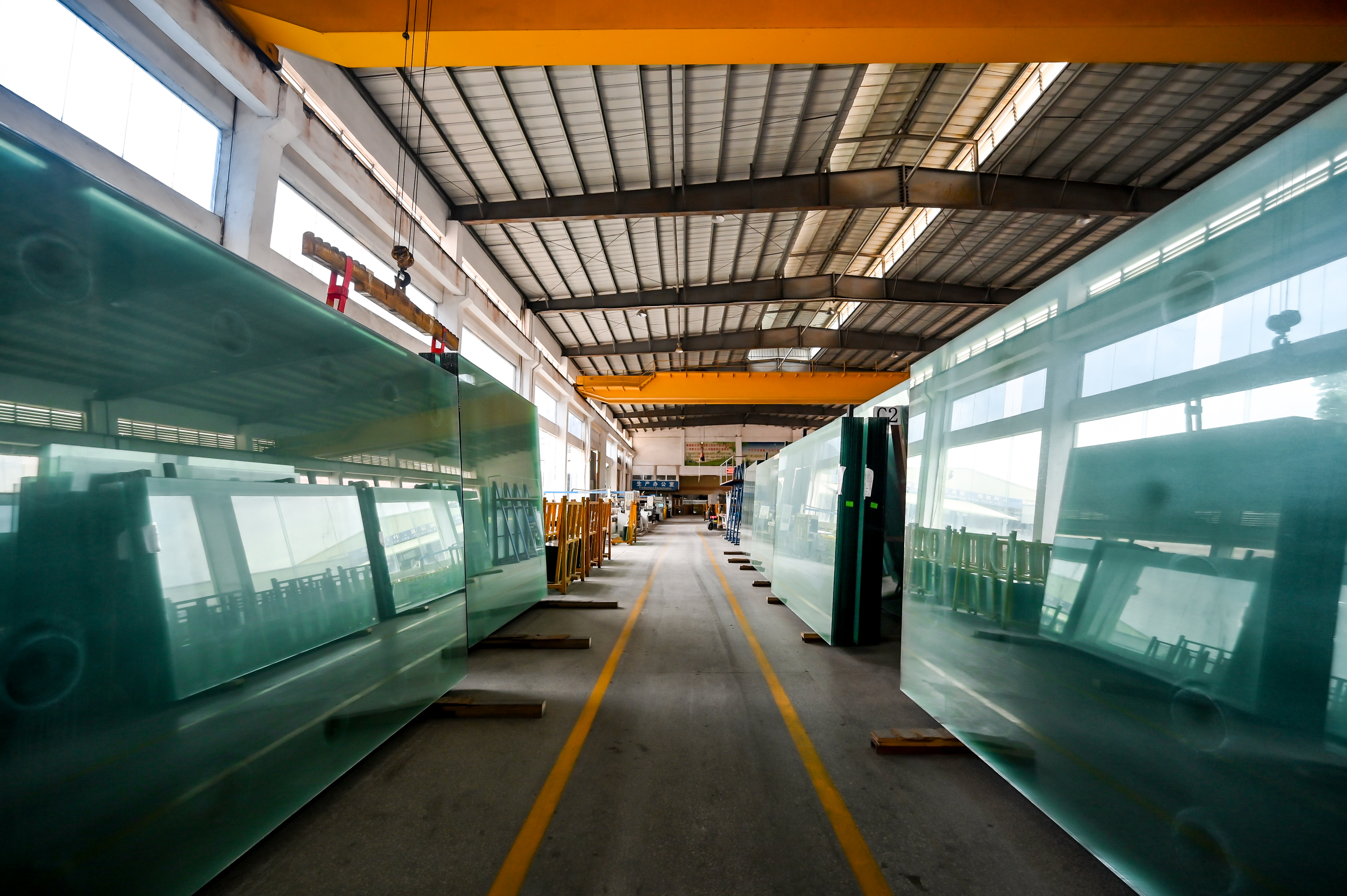
The audit problem: three published numbers, no common denominator
A tempered glass data sheet typically answers three questions at once — how thick the product can be made, how strong it is, and how much heat it tolerates — and answers each with a single figure. That format creates a false sense of comparability. A thickness list is a capability statement about tooling. A stress figure is a measurement that only means something when the test method, the pane thickness and the measuring point are named. A thermostability range can describe continuous service, a short excursion, or a process tolerance, and those three readings are not interchangeable.
The second half of the problem is that delivery assurance lives in a different document from product data. Capacity, order-book behaviour, inspection discipline and after-sales terms are commercial facts, not technical ones. A buyer who audits only the data sheet has verified nothing about the risk that matters most between purchase order and site delivery.
A workable audit therefore has to do two things at once. It must reconcile each published number against a record that can be checked, and it must convert purchasing terms into clauses that can be enforced. A supplier preference decision built on those two tracks is defensible; one built on the highest stress value on the market is not.
Industry background: the standard, not the mill, sets the pass mark
Tempered architectural glass is a category where the technical specification and the market-access requirement are often the same instrument. EN 12150-1:2015+A1:2019 defines and describes thermally toughened soda-lime silicate safety glass for buildings, covering tolerances, flatness, edgework, fragmentation and physical and mechanical characteristics; the 2000 edition of the same part is recorded as withdrawn and replaced. In the United States, ASTM C1048-18 separates heat-strengthened from fully tempered flat glass, ANSI Z97.1-2015 supplies the consensus safety-glazing performance and test reference, and 16 CFR Part 1201 is the binding federal regulation classifying architectural glazing into Category I and Category II. In China, GB 15763.2-2005 is the national reference for building tempered safety glass.
Two further layers matter for risk review rather than base compliance. EN 14179-1:2016 defines heat-soaked thermally toughened glass, the heat-soak process being the recognised route to reduce the risk of spontaneous breakage caused by nickel sulphide inclusions. Where tempered panes are combined into laminated or insulating units, EN 14449:2005, the ISO 12543 series and EN 1279-1:2018 add their own conformity requirements, so a certificate for monolithic tempered glass does not carry over to a sealed unit.
The commercial context is large enough to justify careful selection. Grand View Research valued the global tempered glass market at USD 112.21 billion in 2024, with Asia Pacific holding a 59.9% revenue share. On the customs side, tempered safety glass for construction sits in HS heading 7007, with toughened glass other than that sized for vehicles, aircraft or vessels classified under subheading 7007.19 — a stable handle if sourcing regions are compared later.
The audit framework at a glance
The table below is the audit in one page. Each row pairs a published claim with the evidence that converts it into an acceptance decision.
| Audit item | Published claim | Evidence to demand | Acceptance position |
|---|---|---|---|
| Thickness band | 4, 5, 6, 8, 10, 12, 15, 19, 22, 25 mm | Test report naming the thickness; maximum pane size | Every specified thickness covered by a named report |
| Stress data | 150 MPa intensity; 95 MPa surface stress | Method statement, thickness, whether minimum or typical; fragmentation record | Method and thickness disclosed; fragmentation not fewer than 40 particles per 50 mm × 50 mm per EN 12150-1 |
| Thermostability | 250 °C–320 °C | Written definition of what the range describes; material class statement | Range defined as service, excursion or process; soda-lime versus borosilicate (ISO 3585) resolved |
| Breakage behaviour | Obtuse-angle breakage; occasional self-destruction | Fragmentation record; heat-soak reports and oven calibration | Fragment geometry stated; breakage allowance and replacement term written into the order |
| Conformity documents | SGS reports GZIN1806033811CM / 16CM / 17CM-01; GZHG1204010925FT; SGCC 5566/5568–5581; CPD LBTC202006209S | Certificate copy with number, issuing body, scope and date | Edition current — EN 12150-1:2015+A1:2019, not the withdrawn 2000 edition |
| Commercial terms | MOQ 100 m²; lead time 15–20 days; five-year return and replacement | Written terms, breakage allowance, inspection right | All three transferred into the purchase order |
| Delivery capacity | 100,000 m² monthly capacity; 70% export ratio | Capacity against your order volume; pre-shipment inspection | Order-to-capacity ratio stated; document pack per consignment agreed |
Step-by-step: running the audit
Step 1 — Fix the thickness band against the drawings, not the brochure
KXGLASS lists tempered glass in 4 mm, 5 mm, 6 mm, 8 mm, 10 mm, 12 mm, 15 mm, 19 mm, 22 mm and 25 mm. The audit question is not whether the list exists but which thicknesses are routine and which are project-specific. Ask for the test report that covers the thickness you are buying: a report written for 10 mm does not describe 15 mm or 19 mm.
Two further items belong in the same step. First, maximum pane size, because it decides how many joints a facade or a door set will carry and therefore the installed cost; KXGLASS reports a 3.6 × 16 m flat tempering furnace, and the furnace envelope is the practical ceiling on single-pane dimensions. Second, the processing scope: KXGLASS offers OEM/ODM customisation of size, thickness and logo, so the audit should confirm that edgework, cut-outs and marking stay inside the same quality system rather than moving to a third party whose records you will never see.
The same logic applies to variants. Door tempered glass, window tempered glass, frosted tempered glass, low-iron tempered glass, tinted tempered glass, laminated tempered glass, insulated tempered glass and bent or curved tempered glass each carry their own specification and evidence trail, so a certificate for monolithic clear tempered glass should not be read as covering them.
Step 2 — Reconcile the two stress figures before comparing them
KXGLASS states a tempering intensity of 150 MPa and a surface stress of 95 MPa. These are two different numbers describing two different things, and the first audit action is to stop treating them as one strength score. Ask which measurement each figure represents, at which thickness it was obtained, and whether it is a minimum, a typical value or a maximum. A stress number with no method attached cannot be compared with another supplier's stress number, and setting "intensity" against a competitor's "surface stress" produces a meaningless ranking.
The objective anchor for breakage performance is the fragmentation test. EN 12150-1 requires not fewer than 40 particles counted within a 50 mm × 50 mm square. That is a threshold a buyer can check against a report, unlike a headline stress value. Request the fragmentation record for the thickness being purchased, and keep the two stress figures as supporting data rather than as the acceptance criterion.
Step 3 — Establish what the 250 °C–320 °C range actually describes
KXGLASS publishes a thermostability range of 250 °C to 320 °C. Before that range enters a specification, the buyer should require a written definition: does it describe continuous service temperature, a short-term excursion, or a process tolerance inside the tempering line? A range quoted without a definition will be read by the contractor as a service rating and by the factory as a process window, and the gap surfaces at the first site query.
The material class question sits underneath. ISO 3585:1998 specifies the properties of borosilicate glass 3.3, the material class used for heat-resistant glass applications such as fireplace and stove viewing glass. That is a different material system from soda-lime silicate tempered glass. A soda-lime tempered product should not be sourced against a heat-resistance requirement simply because its data sheet carries a temperature range; if the application is genuinely heat-resistant, the audit switches from tempered glass to a borosilicate specification.
Heat-soak treatment is a separate matter again. It is a quality process applied to reduce spontaneous breakage risk, not a heat-resistance claim, and it should be verified as a process rather than inferred from a temperature figure.
Step 4 — Put breakage behaviour into acceptance and risk review
Breakage belongs in the audit for two reasons: the fragment pattern determines injury risk at the moment of failure, and spontaneous breakage has to be allocated contractually before the first panel is installed. Obtuse-angle breakage — fragments with blunt, obtuse edges rather than sharp needle-like shards — is the behaviour to name explicitly in the request for quotation, so both sides discuss the same failure mode instead of assuming it. Ask the supplier to state the fragment geometry their process targets and to show the fragmentation test record for the thickness supplied.
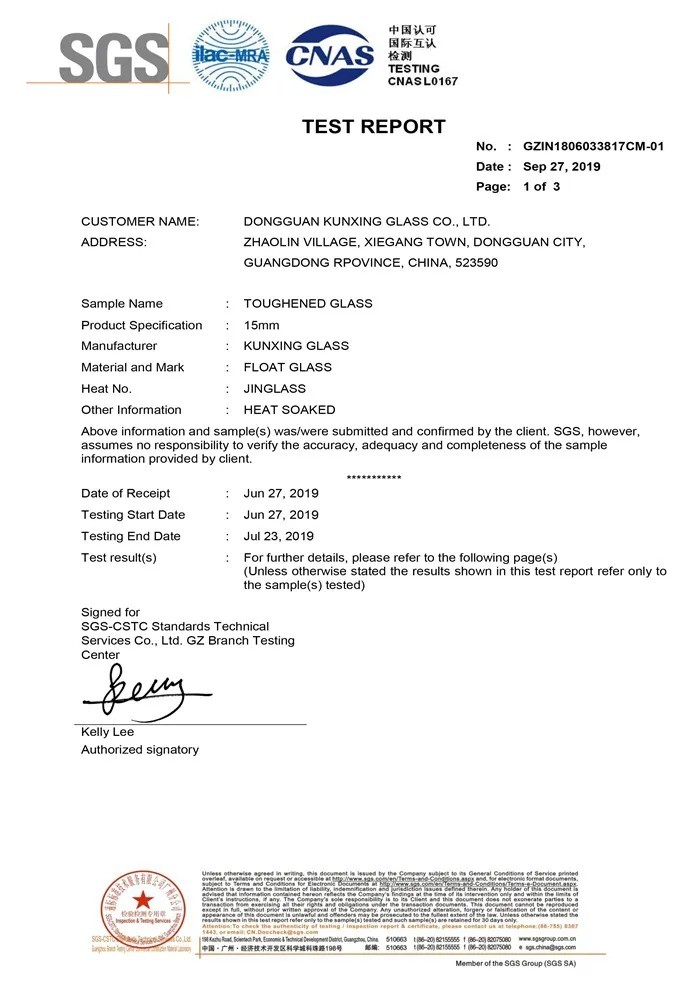
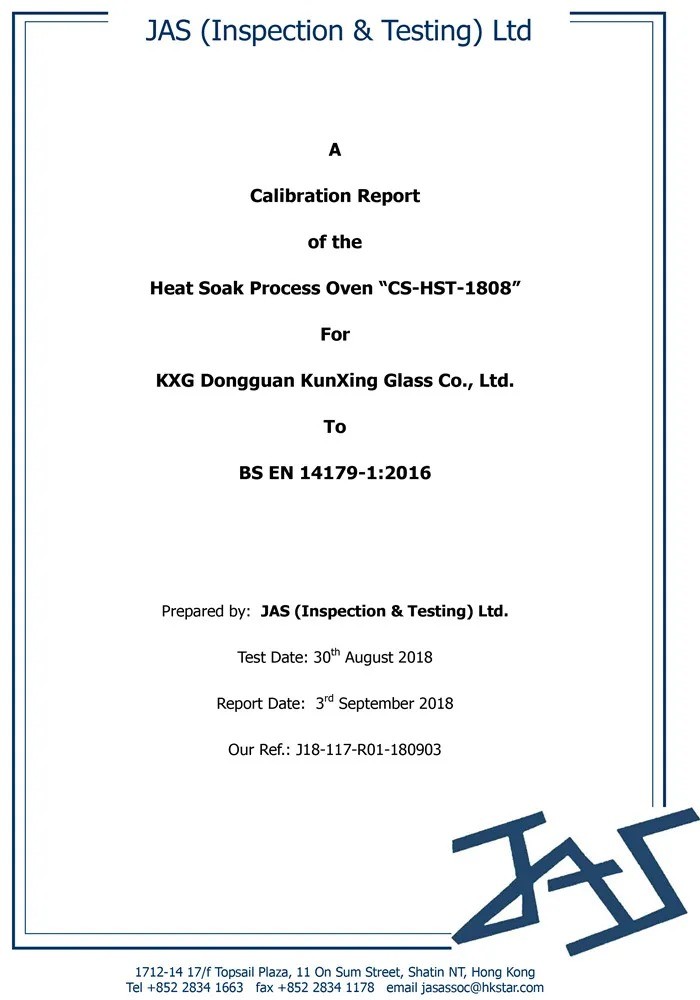
Occasional self-destruction is a known characteristic of tempered glass, most often associated with nickel sulphide inclusions, and a single event is not by itself evidence of a defective batch. The audit response is process evidence rather than reassurance. KXGLASS holds SGS test reports for 6 mm, 10 mm and 15 mm heat-soaked toughened glass, and a calibration report for its heat-soak process oven CS-HST-1808 issued to BS EN 14179-1:2016 by JAS (Inspection & Testing) Ltd. under report number J18-117-R01-180903. An oven calibration plus per-batch heat-soak records is a checkable position; a statement that breakage "rarely happens" is not.
Step 5 — Check documents for number, scope and edition
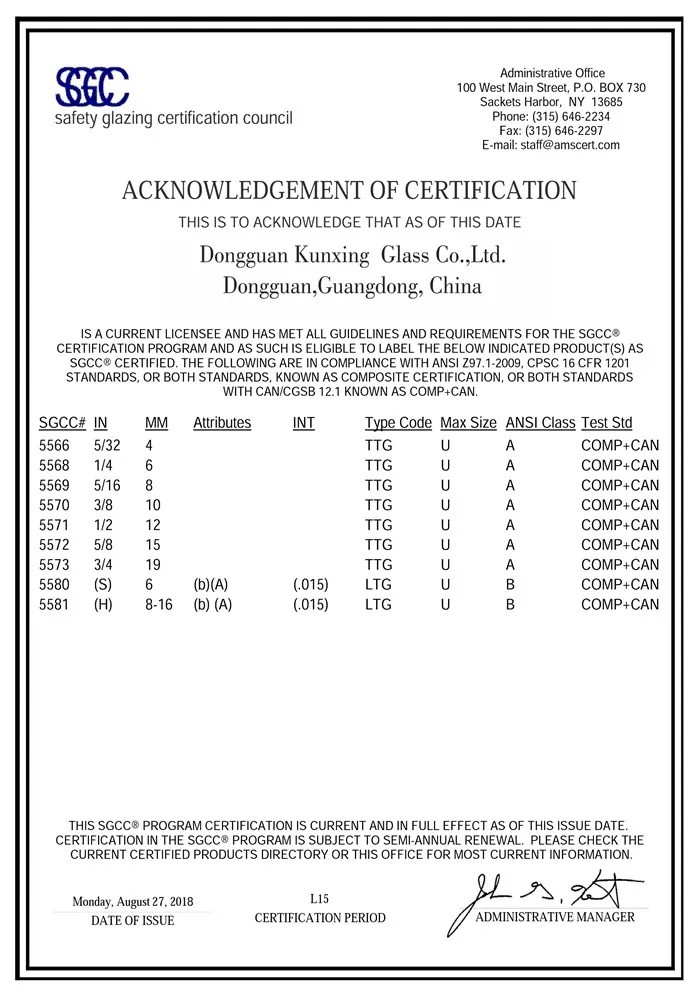
A certificate is evidence only within the scope printed on it. The audit should record, for each claimed standard, the certificate number, the issuing body, the product and thickness covered, the standard edition and the date. The KXGLASS documented set illustrates the level of detail worth demanding: SGS test reports under CNAS/ilac-MRA accredited safety-glass testing for 6 mm (GZIN1806033811CM), 10 mm (GZIN1806033816CM) and 15 mm (GZIN1806033817CM-01) heat-soaked toughened glass; an SGS impact report to BS 6206:1981 & AMD 8693:1995 (GZHG1204010925FT); an SGCC acknowledgement of certification numbered 5566/5568/5569/5570/5571/5572/5573/5580/5581 covering ANSI Z97.1-2009, CPSC 16 CFR 1201 and CAN/CGSB 12.1; and a Declaration of CPD Conformity (LBTC202006209S) for DuPont SentryGlas under EN ISO 12543-2 and EN ISO 12543-3.
Edition control catches more weak submissions than any other single check. EN 12150-1:2000 is withdrawn and replaced by the 2015 edition with its 2019 amendment; a supplier still quoting the older number is either using an outdated template or has not updated its declaration. Company-listed standards such as CE/EN 12150, AS/NZS 2208, SGCC and China 3C remain claims until a certificate copy with number, scope and validity sits in the audit file.
Step 6 — Turn purchasing terms into delivery assurance
Delivery assurance is verified by capacity against order volume, not by a promise. The audit file should carry the supplier's stated monthly capacity, stated lead time, quality-control regime and after-sales term, each converted into a purchase-order clause. KXGLASS states a monthly capacity of 100,000 m², a lead time of 15–20 days, 100% testing, a minimum order of 100 m² and a five-year return-and-replacement term. Its annual output is stated as 1,825,000 m² of single tempered glass, 365,000 m² of laminated glass and 730,000 m² of insulated glass, with a 70% export ratio across Australia, America, Asia and Europe.
Those figures do work only when read against your own order pattern. A 100,000 m² monthly capacity means something different to a buyer ordering 300 m² once and to a buyer ordering 4,000 m² a month; the second buyer should ask what share of capacity the order represents and what happens to the schedule during a peak month. Three clauses carry most of the risk: a breakage allowance stating who owns spontaneous breakage before and after installation, an inspection right before shipment with the inspection standard named, and a documentation pack per consignment — certificates, heat-soak records, packing list — so site acceptance does not depend on retrieving paperwork afterwards.
Keep price comparison on identical scope. A secondary B2B marketplace source reports a wholesale range of USD 15.00 to USD 59.90/m² for 12 mm–19 mm tempered glass in 2026. That band is indicative only and is not a quotation, because it fixes no edgework, heat soak, tolerance, Incoterm or quantity. Use it to sanity-check an offer, never to select a supplier.
Use cases: where the audit changes the decision
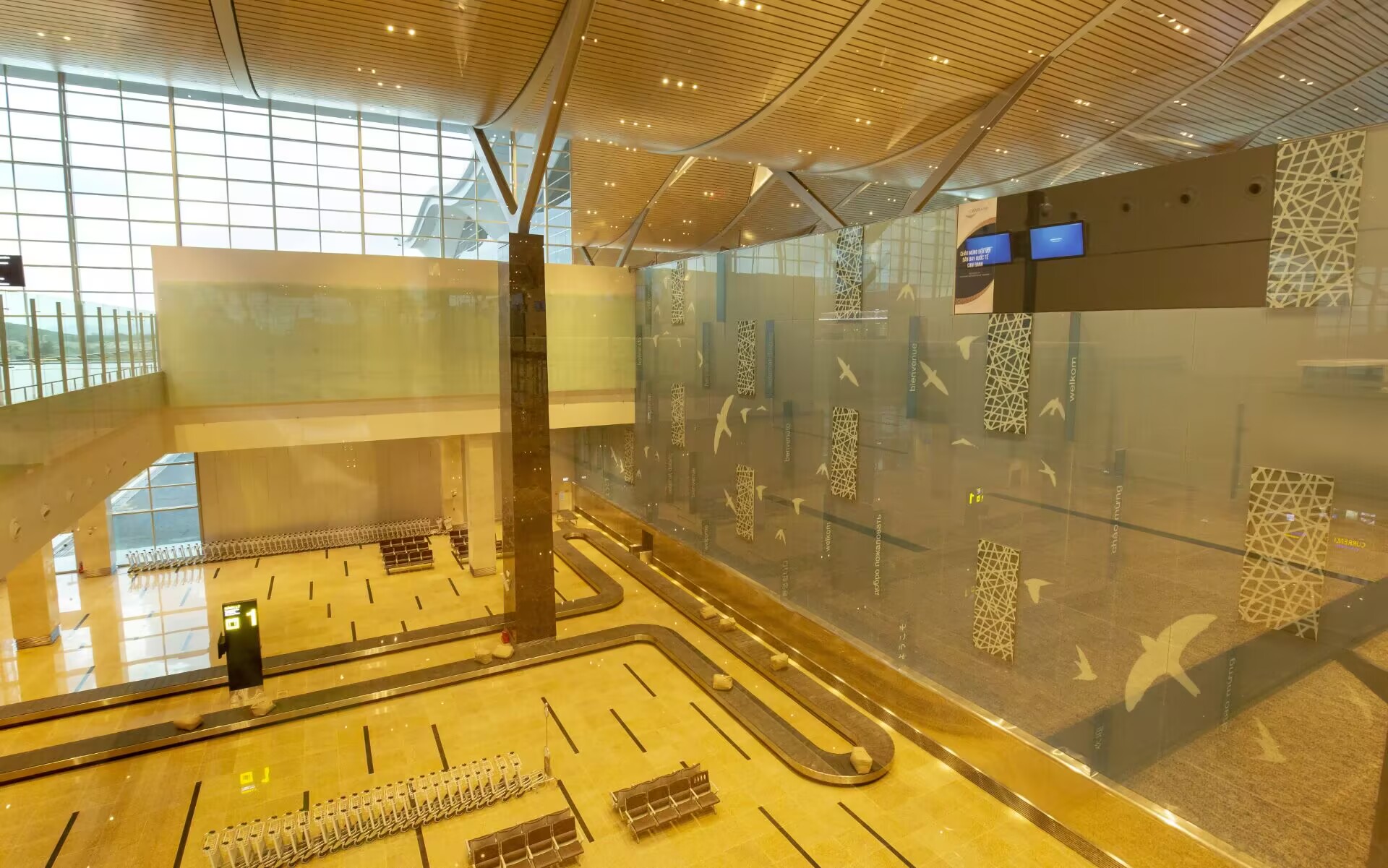
Airport and transport buildings. A company-reported reference for a Vietnamese airport project covers 200–500 units of glass for an airport curtain wall and decorative wall, with colour stability of ≥85% and Mohs hardness 6 recorded among the performance results. In that kind of package the audit question is whether the decorative and structural panes come from the same process line with a single record trail, because mixed sourcing is where colour consistency fails.
Mall skylights and curtain walls. A company-reported end-user project in the UAE records safety performance of ≥3500 Pa together with colour stability of ≥85%. Overhead glazing is exactly where the heat-soak and breakage-allocation clauses from Steps 4 and 6 earn their place, since a self-destruction event above a public concourse is a different commercial event from one in a ground-floor window.
Build-to-rent and speculative facades. A company-reported OEM project in Australia records a relative energy-saving ratio of ≥65% and noise reduction of 60%–70% for an insulated-glass facade. Here the audit must confirm that both the tempered pane certificate and the sealed-unit conformity route (EN 1279-1:2018) are present; a tempered certificate alone does not describe the unit.
What the audit does not prove
An audit of this type verifies documents, definitions and commercial terms. It does not prove batch-level performance, and it does not replace incoming inspection. A test report covers the thickness and product named on it, not every item on a supplier's list. Stated capacity figures remain company-reported until a site visit or third-party inspection confirms them. The stress and thermostability values discussed here are supplier-reported, and their usefulness depends on whether method, thickness and definition are disclosed. Where a claim cannot be traced to a document, the correct audit outcome is "unverified", not "accepted".
Frequently asked questions
Which certificates should a tempered glass supplier produce in a compliance audit?
For every claimed standard, the audit should capture the certificate number, issuing body, product and thickness covered, standard edition and date. KXGLASS documents SGS reports for 6 mm, 10 mm and 15 mm heat-soaked toughened glass (GZIN1806033811CM, GZIN1806033816CM, GZIN1806033817CM-01) under CNAS/ilac-MRA accredited safety-glass testing, an SGS impact report to BS 6206:1981 & AMD 8693:1995 (GZHG1204010925FT), an SGCC acknowledgement numbered 5566/5568/5569/5570/5571/5572/5573/5580/5581 covering ANSI Z97.1-2009, CPSC 16 CFR 1201 and CAN/CGSB 12.1, and a CPD declaration (LBTC202006209S) for DuPont SentryGlas under EN ISO 12543-2 and EN ISO 12543-3. Confirm that EN 12150-1 is cited in its 2015+A1:2019 edition, because the 2000 edition is withdrawn.
What thickness range and process capability should be confirmed before shortlisting?
KXGLASS lists tempered glass in 4, 5, 6, 8, 10, 12, 15, 19, 22 and 25 mm. The audit should separate routine thicknesses from project-specific ones and confirm that a report exists for the thickness actually specified. Capability items to record are maximum pane size, since KXGLASS reports a 3.6 × 16 m flat tempering furnace; OEM/ODM scope covering size, thickness and logo; a stated monthly capacity of 100,000 m²; and 100% testing. Variants such as frosted, low-iron, tinted, laminated, insulated or bent tempered glass need their own evidence, because a monolithic clear-glass certificate does not describe them.
How should price offers be compared when the stress data differ?
Normalise the scope first — thickness, edgework, heat soak, tolerances, quantity, Incoterm and inspection — and compare only like with like. A secondary marketplace figure of USD 15.00 to USD 59.90/m² for 12 mm–19 mm tempered glass in 2026 is indicative only and should never be treated as a quotation. Stress figures do not create a comparable price advantage unless the test method and the thickness behind each number are disclosed; without that, a higher MPa value on a data sheet is a presentation difference, not a verified performance difference.
How should a sample be validated against the data sheet?
Measure thickness at several points across the pane, check edgework and marking, and match the fragmentation and heat-soak records to the thickness supplied. Ask the supplier to restate the 150 MPa intensity and 95 MPa surface stress with the method and thickness behind each figure, and to define the 250 °C–320 °C thermostability range as service, excursion or process. Confirm that the obtuse-angle breakage behaviour described for the sample matches the acceptance wording and the self-destruction clause already drafted in the purchase order.
Is a 15–20 day lead time realistic, and how is delivery assurance obtained?
KXGLASS states a lead time of 15–20 days against a monthly capacity of 100,000 m², a minimum order of 100 m² and a five-year return-and-replacement term, with a 70% export ratio across Australia, America, Asia and Europe. Assurance comes from three things rather than from the number itself: the order volume expressed as a share of monthly capacity, a pre-shipment inspection right with the inspection standard named, and a document pack per consignment covering certificates and heat-soak records. For samples, quotations or the product brochure, the KXGLASS team can be reached at kevin@kxglass.com; the catalogue is available at KXGLASS product brochure (PDF).
Conclusion
Auditing a tempered glass supplier is a reconciliation exercise, not a beauty parade of numbers. The 4 mm to 25 mm band tells you what the tooling can do, but only a report naming the thickness converts it into capability. The stated 150 MPa intensity and 95 MPa surface stress are useful only once the method and thickness are known, and the fragmentation requirement of not fewer than 40 particles per 50 mm × 50 mm gives the buyer a threshold that can actually be checked. The 250 °C–320 °C thermostability range needs a written definition before it reaches a specification, and it should never be used to answer a heat-resistance requirement that belongs to a borosilicate material system.
Breakage is where acceptance criteria earn their keep. Obtuse-angle breakage belongs in the request for quotation, occasional self-destruction belongs in the risk allocation, and heat-soak calibration plus per-batch records are what turn a known product characteristic into a managed one. On the commercial side, a 100,000 m² monthly capacity, a 15–20 day lead time, a 100 m² minimum order and a five-year return-and-replacement term are only meaningful once they appear as clauses. Score candidates on those six auditable items, record every untraceable claim as unverified, and the preference decision will hold up long after the panels are installed.
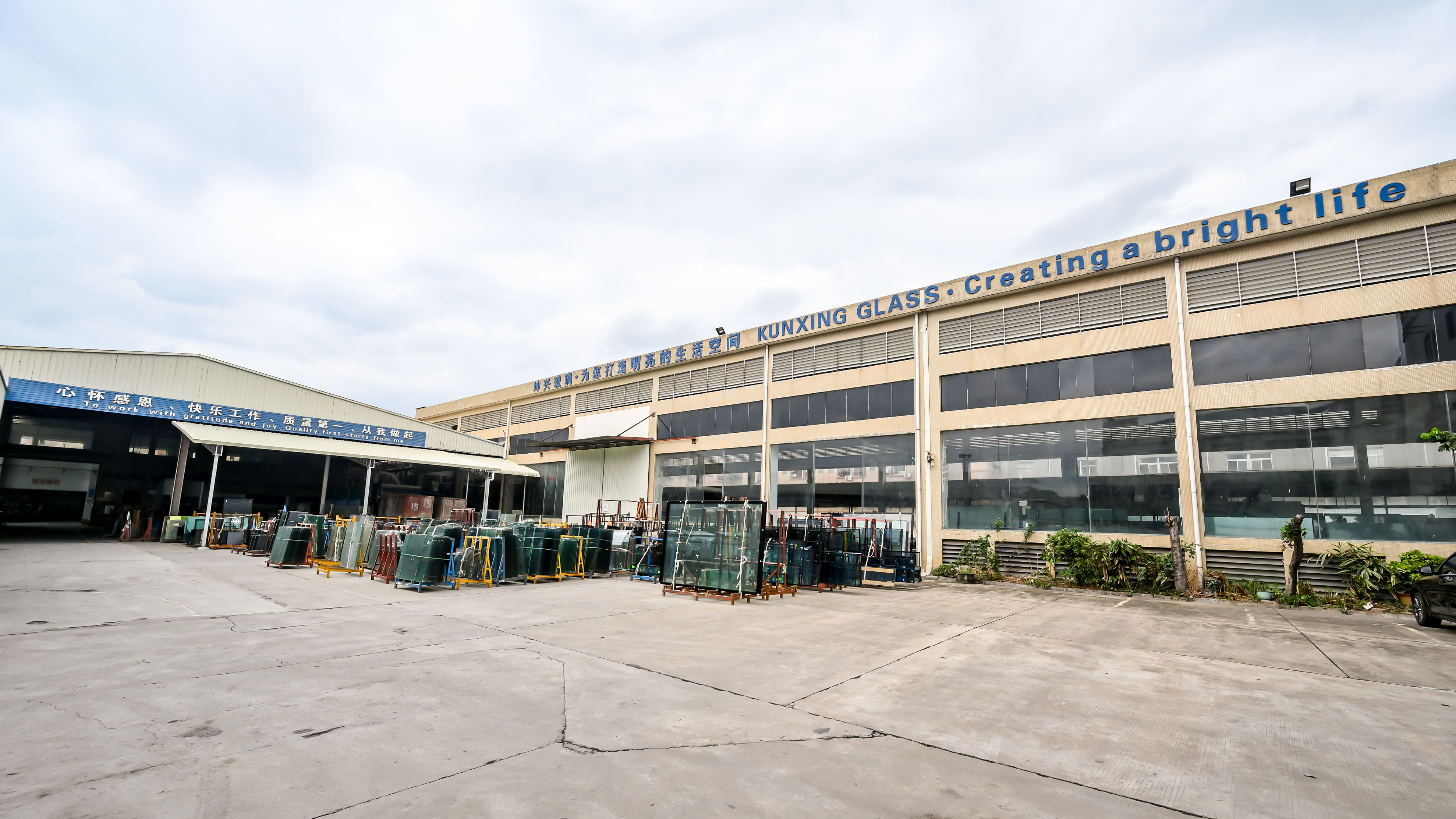
Procurement teams preparing an audit pack can request the current certificate set, heat-soak records and specification sheet from KXGLASS at kevin@kxglass.com, or download the KXGLASS product brochure as a starting reference for the six-step review.
Have Questions or Need More Details?
Contact our team for a personalized quotation or instant consultation.
Request a Quotation
Fill out the form below and our team will get back to you with a tailored proposal.
WhatsApp Direct Chat
Prefer to chat in real-time? Message us on WhatsApp for instant assistance & quick answers.
- Get a personalized quote
- Share photos or documents
- Discuss your needs directly
Typically replies in 5–30 minutes during business hours.