
Tempered vs. Laminated vs. Insulated Glass: A Construction Buyer's Comparison Guide
Tempered, laminated and insulated glass are not three grades of one product. They are three different answers to three different building risks. Tempered glass raises the mechanical strength and thermal-shock resistance of a single sheet. Laminated glass keeps the opening substantially closed after breakage by bonding two or more panes to a PVB or SGP interlayer. Insulated glass is a double-glazed unit with a 6A, 9A or 12A cavity, specified for heat flow, noise and condensation control. A buyer who compares the three on price per square metre alone will usually over-specify one performance and under-specify another.
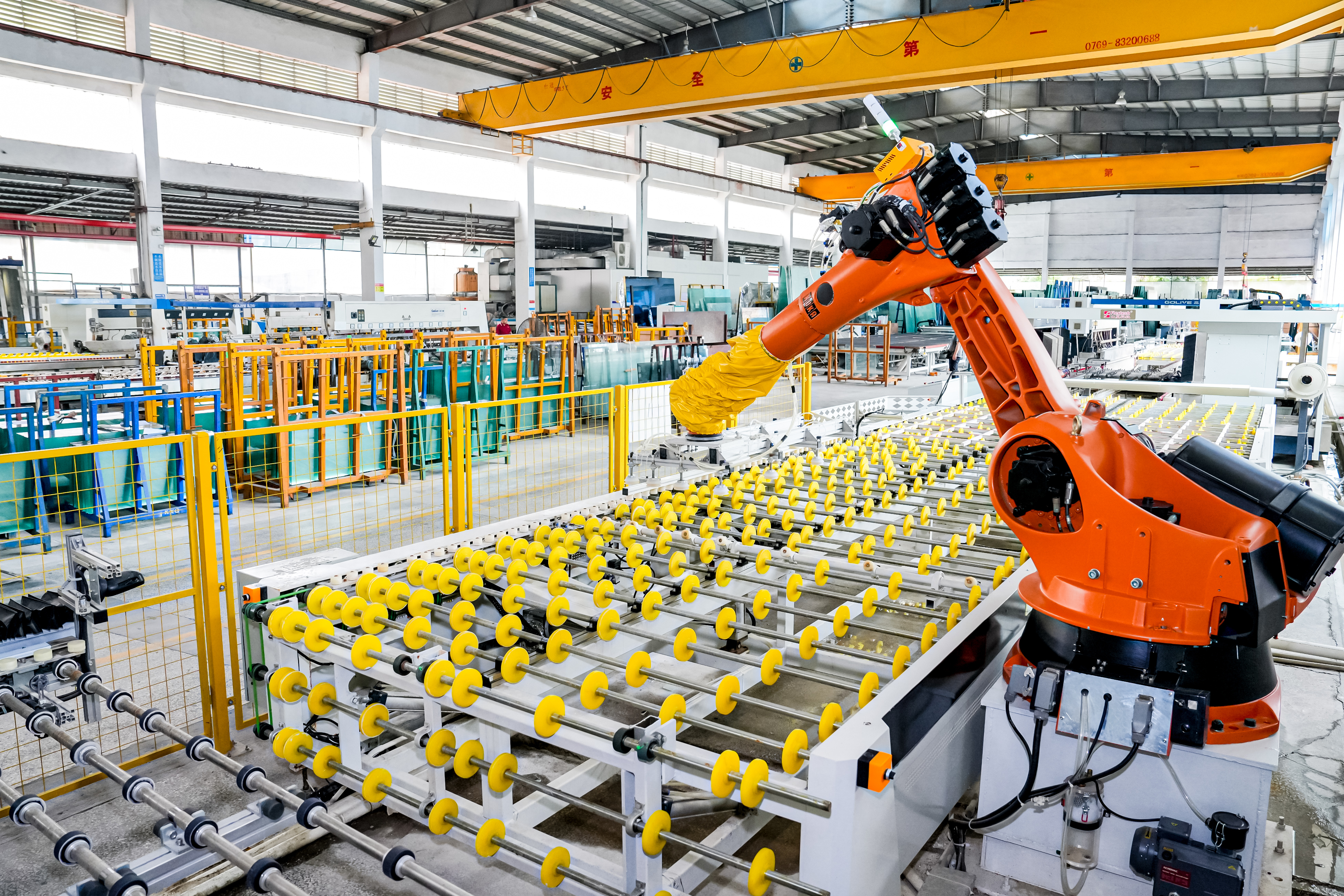
What Buyers Are Actually Comparing
Most glass specification errors do not surface at the order stage. They surface at handover, at the first thermal-shock event, or during the first storm season. The recurring causes are consistent:
- Tempered glass specified for overhead glazing, where the panel delivers strength but no residual integrity once it fractures.
- An insulated unit treated as a safety measure, when the unit's post-breakage behaviour depends entirely on the panes it is built from.
- Thickness increased to solve a thermal or acoustic target that thickness alone cannot reach.
- Spontaneous breakage risk ignored on large, heavily stressed tempered lites.
Once those errors are stripped away, a buyer is really comparing six variables: safety performance after breakage, mechanical strength under wind and impact load, thermal control, acoustic control, dead load on frame and structure, and the compliance documentation that has to survive inspection.
How Each Glass Type Is Built
Tempered glass: one sheet, heat-treated
Tempered glass is a monolithic sheet that has been heated and then rapidly cooled, locking a compressive stress layer into the surface and a balancing tensile zone into the core. The result is a single pane with markedly higher mechanical strength than annealed float glass of the same thickness, and a breakage pattern of small obtuse-angle particles rather than large sharp shards. Because the stress pattern is created after fabrication, tempered glass cannot be cut, drilled or edge-worked once it has been processed.
Laminated glass: two or more panes, one interlayer
Laminated glass bonds two or more glass panes to a polymeric interlayer under heat and pressure. The interlayer is the functional component: PVB is the standard architectural choice, while SGP is specified where higher impact resistance and mechanical strength are required. The glass supplies stiffness and surface quality; the interlayer supplies post-breakage retention.
Insulated glass: two panes, one sealed cavity
Insulated glass is a double-glazed unit — two panes separated by a spacer bar and sealed around the perimeter, with a cavity normally identified by its width: 6A, 9A or 12A. In an insulated unit the cavity, not the glass, does most of the thermal work.
Industry Background: Why the Choice Has Become More Complex
The global tempered glass market was valued at USD 112.21 billion in 2024 and is projected to reach USD 159.27 billion by 2033, according to Grand View Research. The same source places Asia Pacific at 59.9% of 2024 revenue, driven by urbanisation and infrastructure projects, and plain tempered glass at 64.5% of market revenue because of its use in construction and automotive applications. UN Comtrade data puts China's 2024 safety glass exports at approximately USD 3.58 billion, covering more than 647 million square metres.
Those figures are useful for context, not for specification. Published market-size estimates diverge widely — Grand View Research at USD 112.21 billion for 2024, Global Insight Services at USD 67.5 billion and Market Research Future at USD 34.67 billion — because each study draws the boundary of "tempered glass" differently. Buyers should treat any single headline number as directional and source their specification numbers from standards and test reports instead.
What has genuinely changed on the specification side is the combination layer. An exterior opening is now routinely specified as tempered, laminated and insulated at the same time: an insulated tempered unit for thermal performance, a laminated pane for residual integrity, a heat-soak-tested tempered pane for thermal-shock resistance. EN 12150-1:2015, the European standard for thermally toughened soda-lime safety glass, defines the fragmentation behaviour — particles of 5 mm or less — and a thermal resistance rating up to 300°C.

Tempered Glass: Strength, Heat Resistance and the Breakage Trade-off
Tempered glass is the right answer when the dominant risk is impact or thermal shock acting on a single pane. Its numbers explain why: a strength level of around 150 MPa, a surface compressive stress in the region of 95 MPa, and thermostability in the 250°C–320°C range, which is what allows a tempered pane to survive a hot-spot or cold-water event that would crack annealed glass.
Available thicknesses run from 4 mm to 25 mm. In practice, 6 mm tempered glass covers most interior and light-duty window work, 10 mm and 12 mm tempered glass dominate entrance doors and shopfronts, and 19 mm tempered glass is specified where a heavier monolithic pane is required for structural or impact duty. Because tempering works on a single sheet, it is also the base for the functional and decorative variants buyers request: frosted tempered glass for privacy, tinted tempered glass for solar control, low iron tempered glass for colour-neutral edges, and heat resistant tempered glass where service temperature is the binding constraint.
The trade-off is behaviour after failure. Tempering does not make glass unbreakable; it changes how it breaks. A tempered pane releases its stored stress and fragments into obtuse-angle particles, which reduces laceration risk but means the opening is suddenly open. Self-destruction — spontaneous breakage triggered by inclusions such as nickel sulphide — is a recognised, if occasional, failure mode in tempered glass and cannot be eliminated by visual inspection. The practical controls are process controls: a heat soak test that holds glass at 290°C before delivery to trigger early breakage of flawed lites, low-iron glass where risk reduction is prioritised, elastic pads in the frame to absorb thermal movement, and controlled temperature differentials around installed units.
Laminated Glass: PVB, SGP and Residual Integrity
Laminated glass is the answer when the opening has to stay substantially closed after breakage: overhead glazing, balustrades, high-level facades above circulation areas, and any location where falling glass is the hazard being designed out.
Common PVB build-ups are 5 mm + 5 mm, 6 mm + 6 mm and 8 mm + 8 mm, with PVB interlayers ranging from 0.38 mm to 1.52 mm. Interlayer thickness is a specification variable in its own right: a thicker interlayer improves post-breakage retention, and it is usually what a buyer is paying for when moving up within the same glass build-up.
SGP laminated glass occupies a different performance band. SGP delivers higher impact resistance and high mechanical strength than standard PVB laminates, which is why it is specified in typhoon and hurricane regions where wind-borne debris is a design load case, and on large facades where the interlayer must contribute stiffness as well as retention. The practical result is anti-typhoon behaviour rather than only fragment retention.
Edge quality matters more on laminates than most buyers expect, because the edge is where chipping and delamination begin. KXGLASS SGP laminated glass is supplied with a polished edge that brings surface roughness down to Ra 0.1–0.3 μm and raises edge strength by more than 30%, with less edge chipping and a longer service life than traditional alternatives. Compared with the edge effect of standard PVB and SGP laminates, that finish shows a smaller edge stacking difference and fewer visible defects, which is why it is typically specified into high-end residential partitions, luxury hotel facades, commercial display cabinets, art glass installations and premium bathroom doors.
Insulated Glass: What the 6A, 9A and 12A Cavity Buys
Insulated glass is a double-glazed assembly: two panes, a spacer, a sealed cavity. The 6A, 9A and 12A designations describe cavity width in millimetres, and the cavity is what produces the thermal and acoustic result.
The functional case is straightforward. Insulated glass reduces heat transfer through the opening, which lowers both heating and cooling demand. It improves acoustic separation, particularly where cavity width and pane thicknesses are matched to the dominant noise. It reduces the risk of surface condensation on the warm side, because the inner pane stays closer to room temperature. And because each pane in the unit can be thinner than a monolithic sheet sized for the same thermal duty, the assembly helps keep facade dead load and frame load inside the structural allowance — the lower building self-weight argument that often justifies an insulated specification over a thick single pane.
The limits are equally specific. An insulated unit provides no safety or residual integrity of its own; that has to come from tempered or laminated component panes, which is why double glazed tempered glass and insulated tempered glass are the common real-world specifications. Sealed units carry a service-life question tied to the perimeter seal, and a failed seal shows up as internal fogging rather than as a gradual performance decline. Unit thickness and weight must be checked against the frame, the hardware and the installation method before the specification is fixed.
Tempered vs. Laminated vs. Insulated Glass: Comparison Table
| Decision factor | Tempered glass | Laminated glass | Insulated glass |
|---|---|---|---|
| Construction | Single monolithic sheet, heated and rapidly cooled | Two or more panes bonded to a PVB or SGP interlayer | Two panes separated by a spacer with a 6A, 9A or 12A sealed cavity |
| Reference numbers | Around 150 MPa strength; around 95 MPa surface compressive stress; 250°C–320°C thermostability | 5+5, 6+6 and 8+8 builds; PVB interlayer 0.38 mm–1.52 mm; SGP for impact and typhoon duty | Cavity widths 6A, 9A and 12A; heat insulation, noise insulation and condensation control |
| Thickness range | 4 mm–25 mm, with 6 mm, 10 mm, 12 mm and 19 mm most commonly specified | Defined by the pane build-up, for example 5+5 mm up to 8+8 mm plus interlayer | Defined by cavity width plus two panes; total unit thickness is the sum of the parts |
| Behaviour after breakage | Fragments into obtuse-angle particles; the opening becomes open | Interlayer retains fragments; the opening stays substantially closed | No residual integrity beyond that of its component panes |
| Primary performance contribution | Mechanical strength and thermal-shock resistance | Residual integrity, impact resistance and acoustic damping | Heat-flow control, acoustic separation and condensation control |
| Main risk to manage | Occasional self-destruction; no cutting or drilling after tempering | Edge chipping and delamination; added weight per panel | Seal failure and internal fogging; frame and weight compatibility |
| Typical fit | Doors, windows, shopfronts, interior partitions, spandrels | Skylights, balustrades, facades, hurricane zones, overhead glazing | Exterior windows, curtain walls, climate-controlled interiors |
Step-by-Step: How to Reach a Defensible Specification
- List the failure modes first. Impact with falling glass, wind-borne debris, thermal shock, spontaneous breakage, condensation and noise ingress each map to a different product, and writing them down prevents the comparison from collapsing into a price discussion.
- Set the thermal target. If the opening must control heat flow or condensation, an insulated unit is in scope; cavity width (6A, 9A or 12A) and pane build-up decide how far it goes.
- Set the acoustic target. Laminated build-ups with a PVB interlayer and insulated units with a matched cavity both reduce noise, but they work differently: the interlayer damps the pane, the cavity decouples the two panes.
- Set the safety requirement. Where falling fragments are the hazard, laminated glass provides residual integrity; where the risk is impact on a single pane, tempered glass provides the strength. Many openings need both, which is where tempered laminated glass enters.
- Check thickness against frame and structure. Tempered options run 4 mm–25 mm; a laminated or insulated build-up concentrates that thickness into a heavier unit. Verify hardware capacity and dead load before the specification is locked.
- Fix the compliance route. EN 12150-1 for thermally toughened safety glass, plus the destination-market route — CE marking, SGCC (ANSI Z97.1) or AS/NZS 2208 — and a heat soak test where spontaneous breakage risk is a live concern.
- Validate on samples. Thickness, edge finish, interlayer thickness, cavity width, colour and flatness should be confirmed on a physical sample before mass production begins.
Use Cases: Matching Glass Type to the Opening
Entrance doors and shopfronts. 10 mm and 12 mm tempered glass are the standard answer. A beveled or polished edge is a finish decision, and frosted tempered glass or tinted tempered glass handles privacy and solar control without changing the base product.
Exterior windows. Double glazed tempered glass — an insulated unit built from tempered panes — covers thermal, acoustic and safety duty in one assembly, and is the most common specification where all three matter at once.
Curtain walls and high-level facades. Tempered laminated glass, and in typhoon regions SGP laminated glass, because the interlayer has to hold the facade together under wind-borne debris impact rather than simply retain fragments.
Skylights and overhead glazing. Laminated glass is the appropriate base. The specification question is whether the build-up is 6+6 or 8+8, and whether PVB or SGP is warranted by the exposure.
Interior partitions and feature walls. Frosted tempered glass and low iron tempered glass for colour neutrality, with polished edges where the glass edge is exposed to view.
Curved and shaped work. Bent tempered glass and curved tempered glass extend the same strength logic to non-planar geometry, while custom cut tempered glass covers the sizing side. Every piece must be cut and processed before tempering, not after.
High-end interior and hospitality work. Polished-edge SGP laminates are specified where the edge stays visible and long-term appearance matters; the finish that reduces roughness to Ra 0.1–0.3 μm and raises edge strength by more than 30% is aimed directly at that segment.
Sourcing Considerations: What a Supplier Should Be Able to Prove
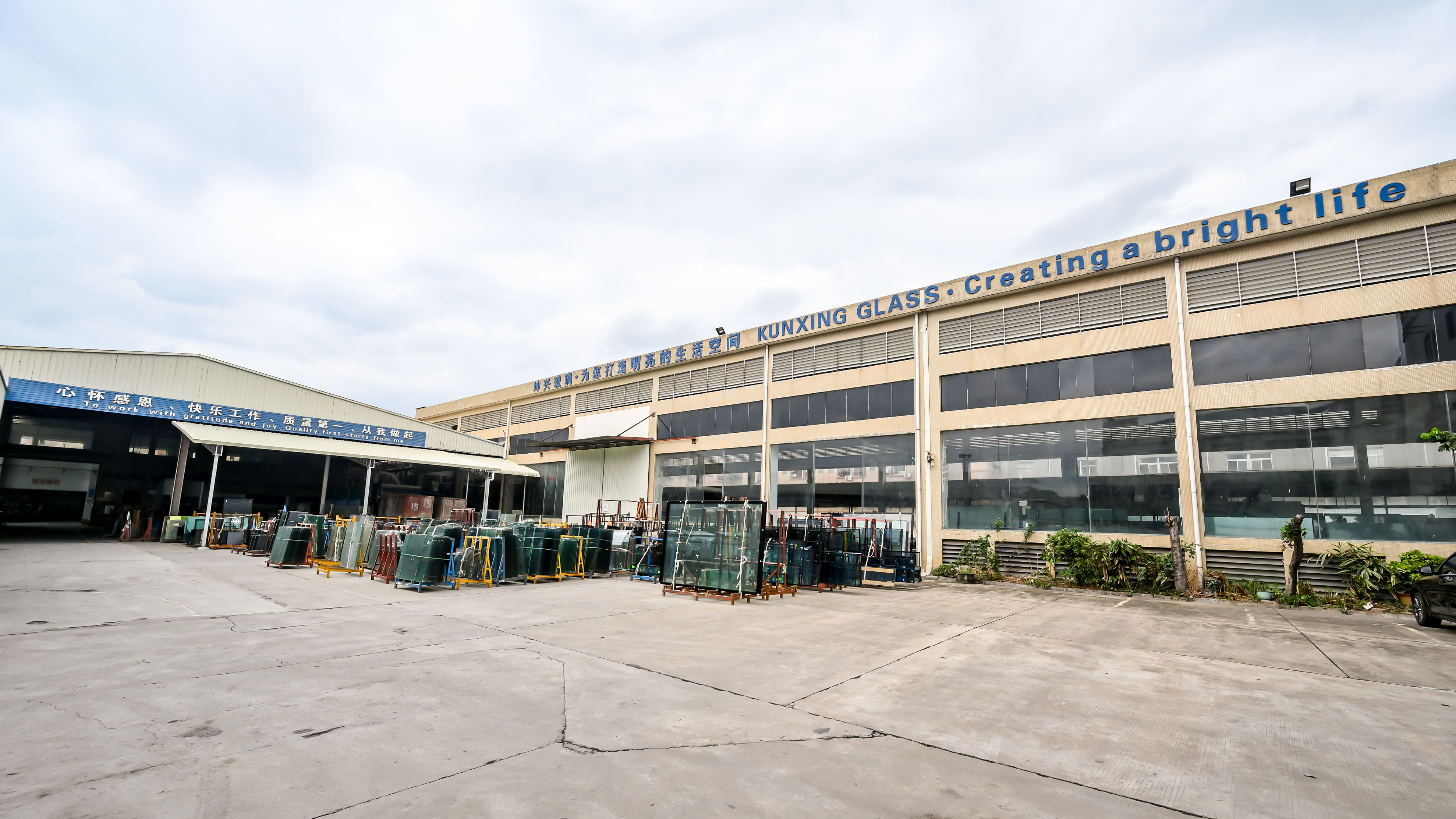
The comparison above only holds if the supplier can produce the combination, not just the individual product. KXGLASS (Dongguan Kunxing Glass Co., Ltd.) is a glass deep-processing manufacturer based in Dongguan, Guangdong Province, China, founded in 1995, with a main product line of clear tempered glass, laminated glass and insulated glass, plus Low-E, coated, heat-soak-treated, hot-bent, bent tempered, coloured enamel, digitally printed, AG and AR glass.
Capacity matters because combination work is where schedules slip. KXGLASS reports annual output of 1,825,000 m² of single tempered glass, 365,000 m² of laminated glass and 730,000 m² of insulated glass, a workforce of 150 and an engineering team of 20. Roughly 70% of output is exported to Australia, America, Asia and Europe.
Compliance is the third test. KXGLASS products are certified under CE EN 12150, SGCC (ANSI Z97.1) and AS/NZS 2208, and the company holds ISO and China 3C certification. For a buyer, the practical question is whether those certificates cover the finished unit — the tempered pane inside an insulated unit, the laminated build-up with its specific interlayer — and not only the base product.
Frequently Asked Questions
1. Which standards apply to tempered, laminated and insulated glass in a construction project?
EN 12150-1:2015 defines fragmentation behaviour for thermally toughened soda-lime safety glass — particles of 5 mm or less — and a thermal resistance rating up to 300°C, and a tempered pane keeps that assessment even when it becomes a component of a laminated or insulated unit. Market access adds CE marking under EN 12150, SGCC / ANSI Z97.1 for the United States and AS/NZS 2208 for Australia. KXGLASS products are certified under CE EN 12150, SGCC (ANSI Z97.1) and AS/NZS 2208, and the company holds ISO and China 3C certification.
2. Can one supplier deliver tempered, laminated and insulated glass, including the combined units?
Yes, provided the supplier processes all three in-house rather than trading them. KXGLASS, based in Dongguan, Guangdong Province, China and founded in 1995, runs clear tempered glass, laminated glass and insulated glass as its main product lines and additionally processes Low-E, coated, heat-soak-treated, hot-bent, bent tempered, coloured enamel, digitally printed, AG and AR glass. Reported annual output is 1,825,000 m² of single tempered glass, 365,000 m² of laminated glass and 730,000 m² of insulated glass, with 150 employees, 20 engineers and roughly 70% of output exported to Australia, America, Asia and Europe. A single source for the combined unit also removes split responsibility when a tempered pane fails inside a sealed assembly.
3. How do costs differ between tempered, laminated and insulated glass?
The cost ladder follows process steps rather than glass area. Monolithic tempered glass carries the fewest steps: one sheet, one tempering cycle. Laminated glass adds a second pane, an interlayer and the lamination process, and an SGP interlayer costs more than a PVB interlayer of the same nominal build-up. Insulated glass adds a spacer, desiccant and primary and secondary sealing on top of two panes. Secondary operations — polished or beveled edges, heat soak testing, bending or curving — each add a step. The reliable comparison is at assembly level, because frame, hardware and installation weight change with the glass choice, so a per-square-metre glass price understates the real difference.
4. What should a buyer check on a sample before approving production?
A sample review should confirm thickness and tolerance against the specified range of 4 mm–25 mm, edge finish, interlayer thickness within the 0.38 mm–1.52 mm PVB range, cavity width at 6A, 9A or 12A, colour consistency across clear, low iron and tinted options, and flatness. Documentation matters as much as the physical sample: a fragmentation test report against EN 12150-1 and a heat soak test report at 290°C where spontaneous breakage risk is a concern. KXGLASS polished edges bring surface roughness to Ra 0.1–0.3 μm and increase edge strength by more than 30%, which is the kind of claim a buyer should be able to verify on the sample itself rather than accept from a datasheet. Sample requests can be sent to kevin@kxglass.com.
5. What affects lead time on a mixed glass order?
Build-up complexity drives lead time more than volume. Multi-layer lamination, SGP interlayers, bent or curved tempering and polished or beveled edges each add a process cycle, and a heat soak test adds a further cycle before packing. Sealed insulated units need their perimeter seal to cure before they can be packed and moved, and certification documents for the destination market have to be prepared alongside the glass. The practical control is to lock the thickness and interlayer specification before scheduling, because changing a build-up after production has started restarts the sequence.
Conclusion: A Simple Decision Rule
If the risk is breakage with falling fragments, laminate. If the risk is impact or thermal shock on a single pane, temper. If the risk is heat flow, noise or condensation, insulate. Most exterior openings need two of the three, and the combination — insulated tempered, tempered laminated, or an insulated unit with one laminated pane — is where the real specification work happens.
Compare the options on performance and documentation rather than on headline glass price, and confirm the build-up on a sample before production. That sequence is what keeps a glass package inside its safety, thermal and acoustic targets at handover.
Next Step: Sample and Quotation
KXGLASS supplies tempered, laminated and insulated glass — including SGP laminates and double glazed tempered units — to distributors, fabricators and project buyers in Australia, America, Asia and Europe.
Request a sample or a quotation: email kevin@kxglass.com, call +86 13500092849, or visit www.kxglass.com.
Download the full product catalogue: KXGLASS brochure (PDF).
Address: No. 10, Jinchuan Road, Zhaolin, Xiegang Town, Dongguan City, Guangdong Province, China 523590.
Have Questions or Need More Details?
Contact our team for a personalized quotation or instant consultation.
Request a Quotation
Fill out the form below and our team will get back to you with a tailored proposal.
WhatsApp Direct Chat
Prefer to chat in real-time? Message us on WhatsApp for instant assistance & quick answers.
- Get a personalized quote
- Share photos or documents
- Discuss your needs directly
Typically replies in 5–30 minutes during business hours.