
Tempered, Laminated or Insulated Glass: Which Build-Up Fits?
Choosing among tempered, laminated and insulated glass is not a contest between three products of the same kind. Tempered glass is a heat treatment applied to a single pane. Laminated glass is an assembly of two or more panes bonded by an interlayer. Insulated glass is a sealed unit built from panes, a spacer and a cavity. They resist different forces, they fail in different ways, and on many projects they appear in the same opening: a tempered ply laminated to a second ply, then sealed into an insulated unit for a facade.
That layering is what makes a plain "which one is better" answer useless. The usable question is narrower: which property does your opening have to guarantee — impact resistance, retention after breakage, thermal separation, or acoustic separation — and what is the least complicated build-up that guarantees it without introducing a new failure mode? This guide works through that question in the order a buyer actually faces it, then shows where each product belongs and what to check before signing.
The Short Answer
- Tempered glass is the right answer when a single pane has to carry impact and break safely — doors, shopfronts, partitions, balustrade infills and other safety-glazing positions where a sprayed pattern of blunt grains is preferable to large shards.
- Laminated glass is the right answer when the opening must stay in its frame after breakage, or when the risk is repeated impact, forced entry or wind-borne debris. A PVB build-up handles general retention; an SGP build-up is the heavier-duty choice for impact and cyclone-exposed facades.
- Insulated glass is the right answer when the opening's main job is to separate two climates or two sound levels, and the frame can carry the extra thickness and weight of a sealed unit.
- Combinations are normal. Tempered plies inside a laminated build-up, or tempered and laminated panes inside an insulated unit, are standard configurations rather than custom exceptions.
Why the Comparison Is Harder Than It Looks
The three names do not sit at the same level, and most bad glass decisions start with treating them as if they did. Tempering is a process outcome applied to a pane. Lamination is a bonding step that produces a composite. Insulation is a unit-assembly step involving a spacer, a seal and a cavity. A supplier can temper a pane, laminate it, and then use it as one face of an insulated unit — three processes, three sets of evidence, one delivered product.
Thickness comparisons across the three are therefore unreliable. A 10 mm tempered pane is a single 10 mm body. A 5 + 5 laminated pane is two 5 mm bodies plus an interlayer. An insulated unit might be 6 mm tempered + 12A + 6 mm tempered, which is a different thermal product again. Comparing these on "thickness" tells you nothing about which one resists what.
Compliance is also applied per layer, not per product name. A tempered pane is assessed against a toughening standard; a laminate against a laminated-glass standard; an insulated unit against an insulating-glass-unit standard. Buyers who ask for "certified glass" without naming the layer often receive a certificate that covers only part of what they are buying.
Finally, the failure behaviour changes when the layers change. A tempered pane that breaks disappears into grains. The same tempered pane laminated to a second ply stays in the frame as a cracked but connected sheet. Same pane, different consequence — and that difference is usually what the specification was really trying to buy.
What Tempered Glass Actually Delivers
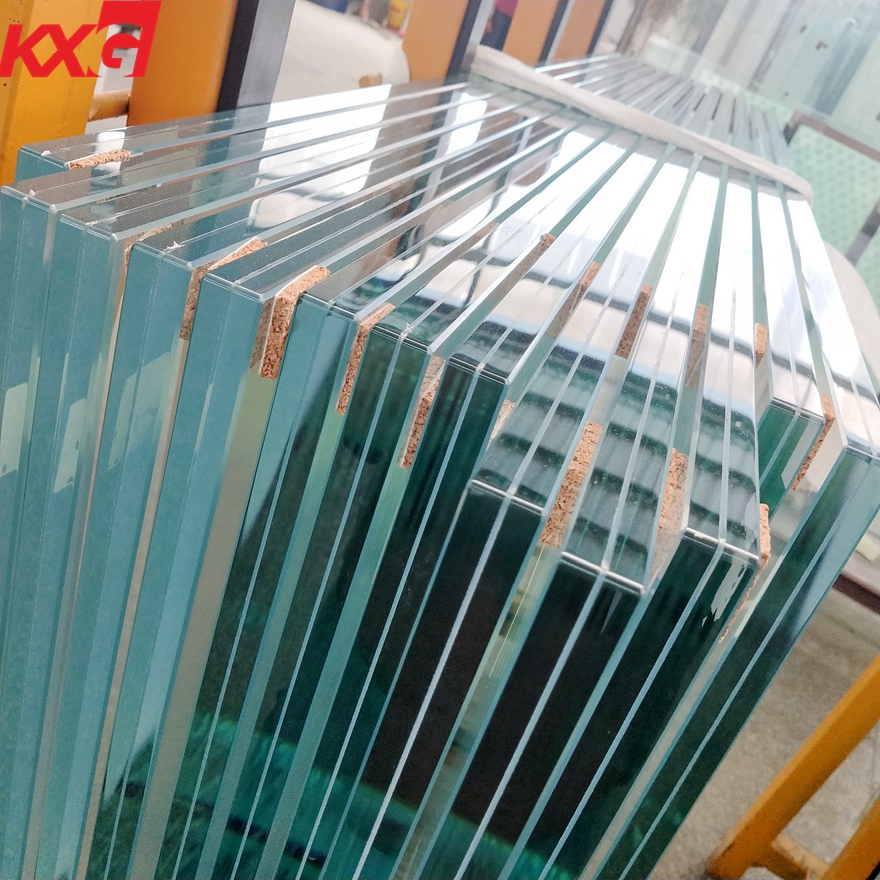
Tempered glass is made by heating a soda-lime glass pane and cooling it rapidly and evenly, which locks the surfaces into compression and the core into tension. The datasheet values that buyers see around this treatment — roughly 150 MPa intensity, 95 MPa surface stress, and a thermostability window of 250–320 °C — describe that locked-in stress state and the temperature range the finished pane is expected to survive without losing it. The compressive surface layer is what resists crack propagation, which is why a tempered pane takes far more impact than the annealed pane it started as.
Safety comes from the breakage pattern, not only from the strength. EN 12150-1 requires a fragmentation result of not fewer than 40 particles counted within a 50 mm × 50 mm square in the fragmentation test. In practice that translates into small, relatively blunt grains rather than large dagger-like shards — the reason tempered glass is the default answer for door tempered glass, window tempered glass and similar safety-glazing positions.
Two constraints follow the buyer. The first is that tempering is the last operation: once a pane is tempered it cannot be cut, drilled, or have its edges ground, so every dimension, hole, notch and edge finish has to be finalised before the furnace. Custom cut tempered glass is therefore a pre-production decision, not an adjustment made on site. The second is that tempering is a treatment of the base glass, so the base still matters — clear, low iron tempered glass, tinted tempered glass, frosted tempered glass and tempered float glass all finish differently, and the iron content of a low-iron body affects how neutral the final colour reads.
The limit that buyers most often miss is spontaneous breakage. Nickel sulphide inclusions can trigger a delayed fracture after installation, which is why heat-soak treatment exists as a separate process step. EN 14179-1:2016 defines heat-soaked thermally toughened soda lime silicate safety glass, and the heat-soak process is the recognised route to reduce the risk of spontaneous breakage caused by nickel sulphide inclusions. Heat soak lowers probability; it does not make the risk zero, and it should be specified rather than assumed.
What Laminated Glass Actually Delivers
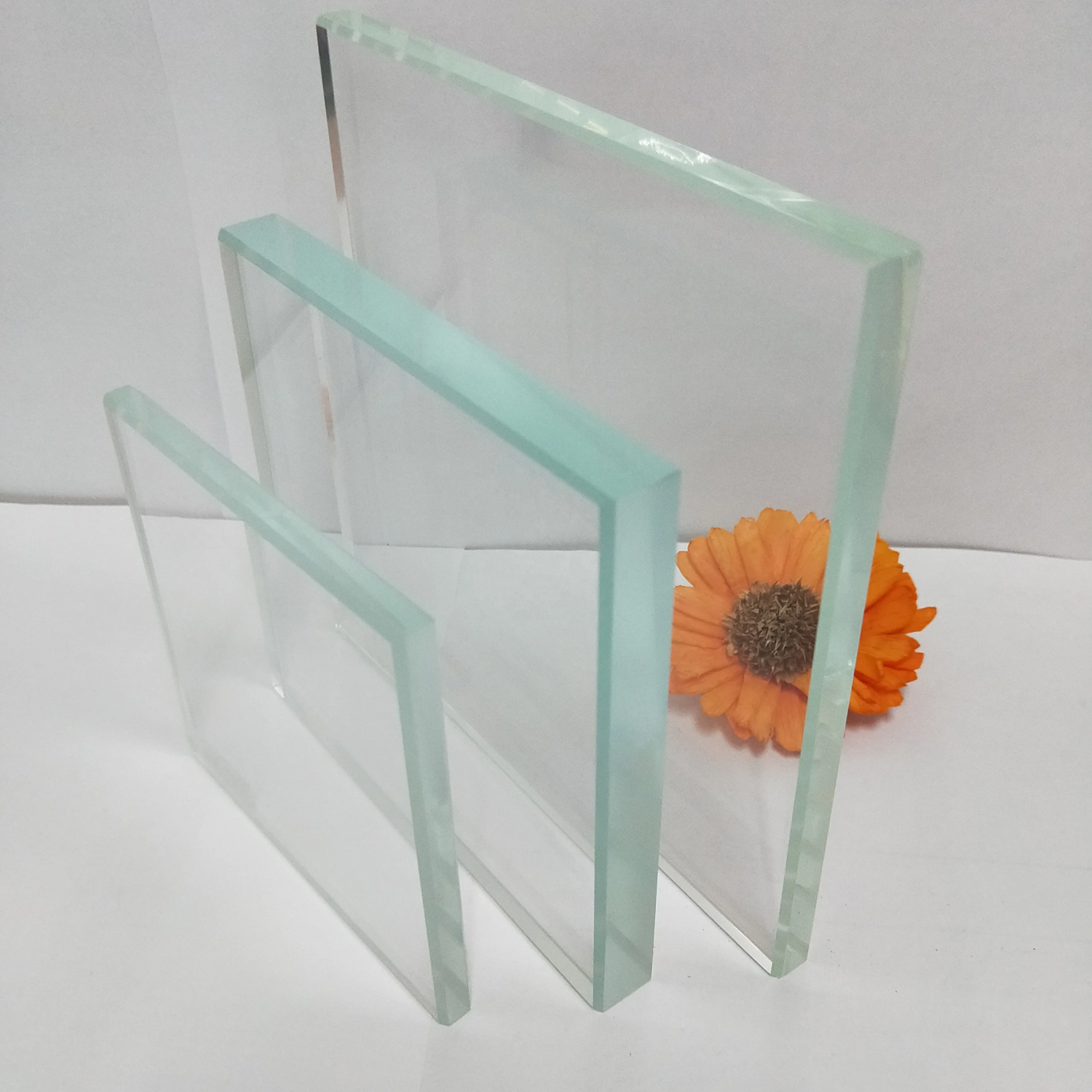
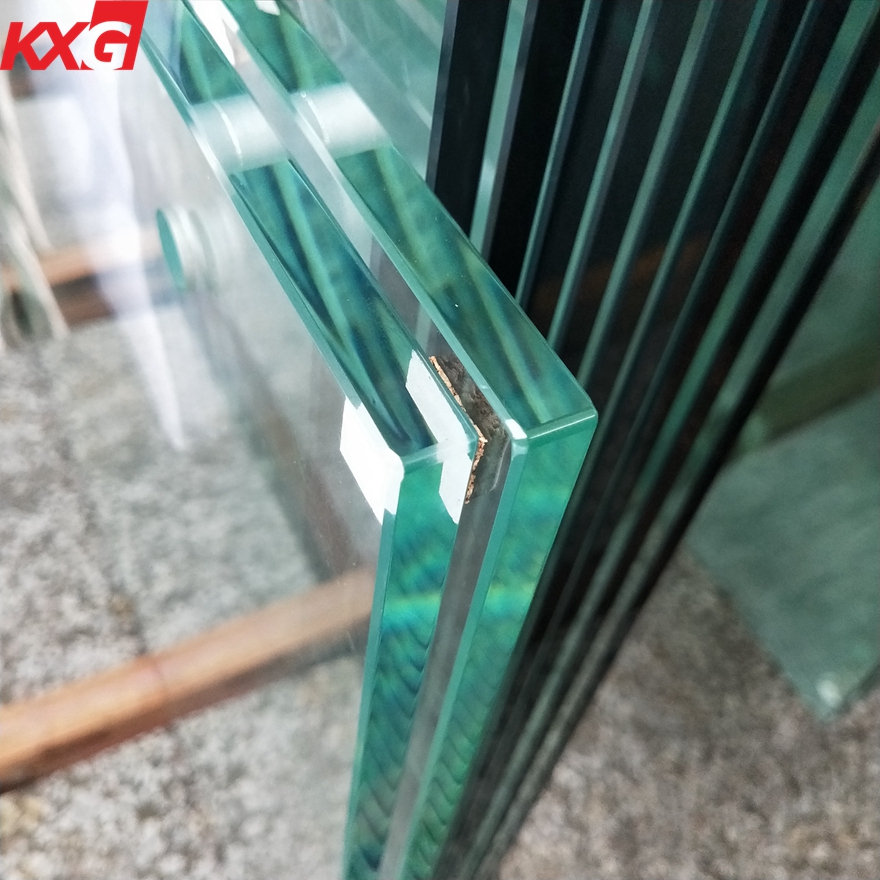
Laminated glass bonds two or more glass plies through a polymer interlayer. PVB is the common general-purpose interlayer and is quoted in the familiar build-ups: 5 + 5, 6 + 6 and 8 + 8 with interlayer thicknesses running from 0.38 mm up to 1.52 mm. The interlayer is what changes the failure story. When the glass cracks, the interlayer holds the fragments in place, so the opening retains a barrier instead of opening up.
SGP is the stiffer, higher-performance interlayer option. It is specified where the laminate must contribute structural behaviour, resist heavier impact, or hold together under wind-borne debris in cyclone and typhoon regions. The difference between PVB and SGP is not marketing language: it is a difference in interlayer stiffness and post-breakage behaviour, and it changes both the price and what the laminate can be claimed to do.
Laminated glass can be built from annealed, heat-strengthened or tempered plies. A tempered laminated glass build-up gives both behaviours in one unit: the plies carry the tempering strength, and the interlayer provides post-breakage retention. Because tempering must precede lamination — no cutting or drilling is possible after tempering — the production sequence is fixed, and every dimension has to be confirmed before the first furnace pass. If heat soak is also required, it sits in that sequence as an additional step.
The European framework is EN 14449:2005 for laminated glass and laminated safety glass conformity, with the ISO 12543 series as the international reference family. Laminates are heavier and thicker than a single pane of the same nominal size, they need correctly finished edges to avoid moisture ingress into the interlayer, and the total assembly affects what the frame and hardware must carry. Those are design consequences, not defects.
What Insulated Glass Actually Delivers
Insulated glass — also quoted as double glazed tempered glass or insulated tempered glass when tempered panes are used — is a sealed unit of two or more panes separated by a spacer and a cavity. The cavity widths quoted in specifications, 6A, 9A and 12A, are the air-space dimensions in millimetres. The unit's job is to reduce heat transfer and to improve acoustic separation between inside and outside, and its secondary benefit is a warmer room-side pane, which reduces surface condensation.
An insulated unit is a system, not a gap. The spacer, the primary and secondary sealants and the desiccant all determine whether the cavity stays dry over the service life. EN 1279-1:2018 sets out the European framework for insulating glass units, covering generalities, system description, rules for substitution, tolerances and visual quality. Note what that standard covers: the sealed unit as a product, not the individual toughened pane inside it. The pane keeps its own EN 12150 evidence; the unit carries the EN 1279 evidence.
The limitation is that insulation is not strength. An insulated unit does not resist impact because it has two panes; it resists impact because of the glass plies selected and their treatment. If the opening needs both thermal separation and impact retention, the standard solution is an insulated unit whose panes are themselves tempered, laminated, or both — not a thicker cavity.
Comparison Table: What Each Build-Up Does and Does Not Do
| Dimension | Tempered glass | Laminated glass | Insulated glass |
|---|---|---|---|
| What it is | Single pane, heat-treated and rapidly cooled | Two or more plies bonded through an interlayer | Sealed unit of panes, spacer and cavity |
| Primary job | Impact strength and safe fracture pattern | Retention after breakage, impact and forced-entry resistance | Thermal and acoustic separation |
| How it fails | Breaks into small blunt grains; occasional spontaneous breakage from nickel sulphide inclusions | Cracks but stays in the frame; edge seal and interlayer condition determine service life | Seal or cavity failure degrades performance; the unit is not a strength product by itself |
| Typical build-ups | 6 mm, 10 mm, 12 mm, 19 mm and other single-pane thicknesses | 5 + 5, 6 + 6, 8 + 8 with 0.38–1.52 mm PVB; SGP for higher demand | 6A, 9A and 12A cavities with tempered, laminated or annealed panes |
| Governing standard (EU) | EN 12150-1:2015+A1:2019; EN 12150-2:2004 for conformity; EN 14179-1:2016 if heat soaked | EN 14449:2005; ISO 12543 series internationally | EN 1279-1:2018 |
| Best-fit applications | Doors, shopfronts, partitions, balustrade infills, spandrels | Overhead glazing, canopies, security glazing, cyclone-exposed facades | Exterior windows, facades, curtain walls |
| Main limitation | Cannot be cut or drilled after tempering; residual spontaneous-breakage risk | Heavier and thicker than a single pane; interlayer type drives cost and performance | Adds no impact resistance unless the panes are specified for it |
| Cost sensitivity | Driven by thickness, area, edgework and heat-soak option | Driven by ply thickness, interlayer type and interlayer thickness | Driven by pane specification, cavity, spacer system and unit size |
Step-by-Step: How to Reach a Decision
Step 1 — Name the governing requirement
Write down what the opening has to guarantee. Safety glazing against human impact is a different requirement from retention under wind-borne debris, which is different again from thermal separation. Where two requirements coexist — a facade window in a cyclone region, for example — you need two answers, not a compromise between them.
Step 2 — Decide whether the answer is a pane or an assembly
If the requirement is strength and safe fracture, a tempered pane may be sufficient. If the requirement is that the opening keeps its barrier after breakage, the answer is an assembly with an interlayer. If the requirement is climate separation, the answer is a sealed unit. This is the step where most over-specification and most under-specification happen.
Step 3 — Choose the ply treatment
Fully tempered, heat-strengthened and annealed are distinct product categories, and ASTM C1048-18 treats heat-strengthened and fully tempered flat glass as separate specifications rather than grades of the same thing. Do not accept a quotation that says "toughened" without naming the treatment level and the standard behind it.
Step 4 — Choose the interlayer if the answer is laminated
PVB covers general safety and retention duties. SGP is specified where the laminate must be stiffer or must survive heavier impact. The interlayer thickness within the PVB range (0.38 mm to 1.52 mm) is a real variable, not a formality, and it should appear in the quotation as a number.
Step 5 — Choose the cavity if the answer is insulated
6A, 9A and 12A are different products with different thermal and acoustic behaviour, and each requires a frame depth that can take the unit. Confirm the pane make-up at the same time — an insulated unit is only as strong, or as safe, as the panes inside it.
Step 6 — Fix the compliance route before pricing
Decide which standard applies to which layer, whether heat soak is required, and which documents you will accept as evidence. A comparison built on price before this step is not a comparison; it is a list of numbers.
Where Each Choice Belongs
Doors, shopfronts and interior partitions
Tempered glass is the conventional answer where the dominant risk is human impact and the pane must break safely. Frosted tempered glass is often used where privacy and a clean surface matter, and beveled or polished edges are chosen for exposed-edge work. If the door also has to resist forced entry, the same opening moves to a laminated build-up — often tempered laminated, so the plies still break safely while the interlayer holds the assembly together.
Windows, facades and double-glazed units
Exterior windows and curtain walls are insulated-unit territory: 6A, 9A or 12A cavities with tempered panes where safety glazing is required, or laminated panes where retention is required. Double glazed tempered glass is the common specification for upper-floor facade glazing, where both thermal performance and safe breakage are expected.
Overhead glazing, canopies and balustrades
Anything above head height changes the calculation, because a broken pane has somewhere to fall. Laminated build-ups are the usual route, and overhead work is also where heat-soak treatment is most often specified for tempered plies. The combination — tempered plies, an interlayer, and a documented heat-soak record — is a specification decision that should be written, not implied.
Curved, bent and premium-edge work
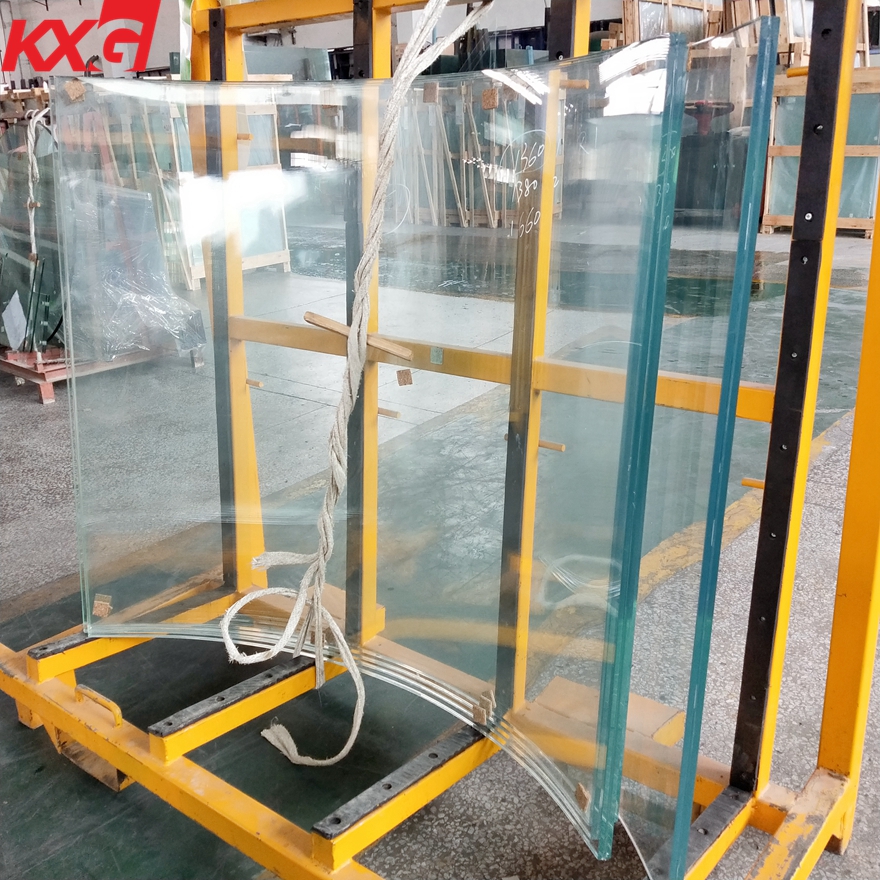
Bent tempered glass and curved tempered glass are produced within the same toughening framework as flat glass, but the geometry has to be fixed before tempering because nothing can be adjusted afterwards. Where the edge is on show — luxury retail, hotel joinery, display cabinets — edge quality becomes a visible cost line rather than a hidden one.
Two Risks Buyers Underestimate
Tempered glass can break without being hit
Spontaneous breakage is a real, documented characteristic of tempered glass rather than a supplier defect story. It is associated with nickel sulphide inclusions that change volume over time and eventually crack the pane from inside. Three controls are available and all three are specification items, not shop-floor habits. Heat-soak testing heats the glass to 290 °C before delivery to trigger early breakage of flawed panes. Elastic pads in the frame reserve gaps for thermal expansion and contraction. And temperature-difference control on site — keeping air conditioning at or above 26 °C in summer, avoiding direct blowing onto the glass, and closing windows in extreme weather — reduces the thermal stress the pane carries.
None of these controls removes the risk entirely. What they do is move an unpredictable site failure into a controlled factory step, which is why heat soak is written into specifications for overhead and high-exposure glazing.
An insulated unit's performance depends on its seal
Buyers tend to compare insulated units on cavity width and pane specification, then forget that the unit's durability rests on the spacer and the sealants. Once moisture reaches the cavity, the unit's thermal and optical performance degrades and the fix is replacement, not repair. When comparing suppliers, ask what the unit's edge-seal system is and which standard the unit — not just the pane — is assessed against.
What Changes the Price and the Lead Time
A price comparison across these three products is only meaningful per square metre, on identical build-ups, at identical sizes, with identical edgework, quantity, packaging and delivery terms. On that basis, a 2026 wholesale benchmark compiled by a secondary source puts 12 mm to 19 mm tempered glass at roughly USD 15.00 to USD 59.90 per m². Treat that as a screening band for a single-pane tempered product only. It does not fix thickness, size, edge finish, interlayer, or Incoterm, and it says nothing about a laminated or insulated equivalent.
What drives the differences between the three is process count. Tempering adds a furnace pass. Heat soak adds a second, longer furnace cycle. Lamination adds interlayer handling and bonding. An insulated unit adds spacer assembly, sealing, desiccant and curing. Each step adds handling risk and a place in the production queue, and each is a documented inspection point you are entitled to ask about.
Edgework is the line item buyers most often treat as cosmetic. On exposed-edge work it is not. Polished edges reduce surface roughness to Ra 0.1–0.3 μm and are credited with increasing edge strength by 30% or more, with less edge chipping, longer service life and lower maintenance frequency as the downstream benefits — and the same comparison data notes a reduced processing cost and lower total installed cost, with the strongest fit in high-end residential partitions, luxury hotel facades, commercial display cabinets, art glass installations and premium bathroom doors.
Lead time follows the same logic. A single tempered pane, a heat-soaked tempered pane, a tempered laminate and an insulated unit are four different production routes with four different queue positions. Ask each supplier to state the process route for your specific build-up and where inspection happens along it, then compare dates on that basis. A date quoted against a route you have not seen is not a date you can plan around.
Compliance Map: One Standard per Layer
The regulatory background is unusually well documented for this product family, which makes it easy to check and easy to get wrong. In the European framework, EN 12150-1:2015+A1:2019 specifies tolerances, flatness, edgework, fragmentation and physical and mechanical characteristics for monolithic flat thermally toughened soda lime silicate safety glass used in buildings; the earlier 2000 edition is withdrawn and should not appear in a current specification. EN 12150-2:2004 covers conformity evaluation and the CE marking route, and EN 14179-1:2016 covers heat-soaked material.
Laminated products are assessed under EN 14449:2005 for conformity, with ISO 12543 as the international reference. Insulating glass units are assessed under EN 1279-1:2018. In the United States, ASTM C1048-18 specifies heat-strengthened and fully tempered flat glass, 16 CFR Part 1201 sets the federal architectural glazing safety requirement with its Category I and Category II classification, and ANSI Z97.1-2015 provides the consensus performance and test-method reference used alongside it. In China, GB 15763.2-2005 is the reference standard for building tempered safety glass.
Two practical notes follow. First, for customs and duty work, tempered safety glass for construction is classified under HS heading 7007, with toughened glass other than that sized for vehicles, aircraft or vessels falling under subheading 7007.19. Second, the term "heat resistant tempered glass" needs care: soda-lime tempered glass is a safety product, not a heat-resistant material in the technical sense. Borosilicate glass 3.3, specified under ISO 3585:1998, is a different material system and is the correct reference for genuinely heat-resistant applications such as fireplace and stove viewing glass. Specifying soda-lime tempered glass against a heat-resistance requirement is a material-selection error, not a supplier failure.
Turning the Comparison into a Purchase
Once the build-up is decided, the remaining question is whether a supplier can produce it repeatedly and prove it. A useful verification sequence is: confirm the certificate number, issuing body, scope, product family and validity date for each standard claimed; confirm whether heat-soak treatment is offered in-house; confirm the maximum producible size and the thickness range for each process; confirm the edge finish and whether it is completed before tempering; and confirm the inspection records that will accompany the delivery.
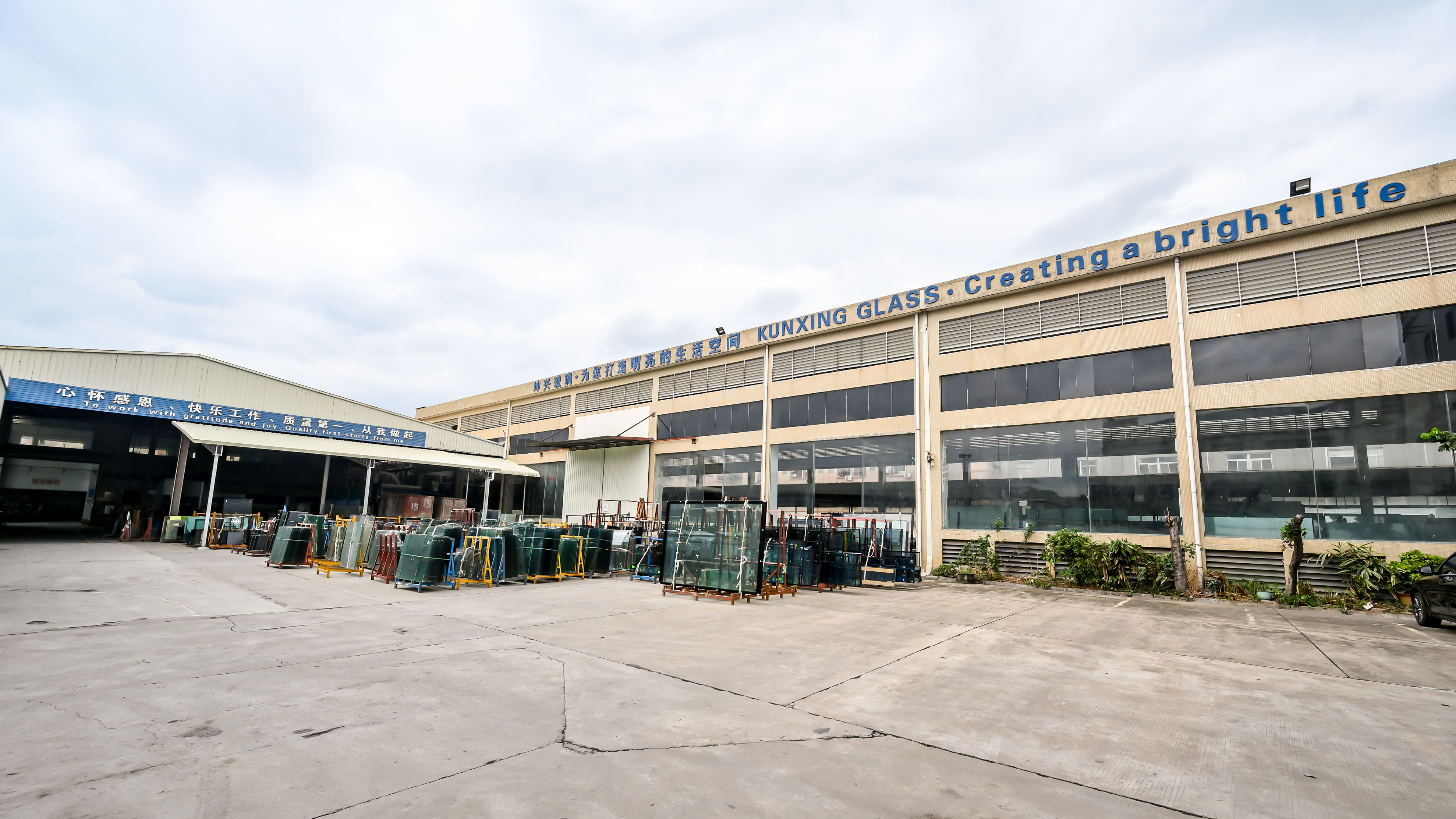
For context on supplier scale, KXGLASS (KXG) — the brand of Dongguan Kunxing Glass Co., Ltd., based in Dongguan, Guangdong Province, China — reports a 30,000 m² production site, around 150 employees including a 20-engineer technical team, and annual output of 1,825,000 m² of single tempered glass, 365,000 m² of laminated glass and 730,000 m² of insulated glass, with roughly 70% of output exported to markets including Australia, America, Asia and Europe. Its product range covers tempered, heat-dip treated, laminated, insulated, hot-bent and bent tempered glass, and the company states ISO certification, China's 3C certification, and conformity with standards including European CE/EN 12150, Australian AS/NZS 2208 and American SGCC. Buyers should still verify certificate scope and validity directly, as with any supplier claim — the point of the list is to give you specific documents to request, not to close the question.
Frequently Asked Questions
Which standard applies to tempered, laminated and insulated glass in a European project?
Each layer has its own standard. Monolithic flat thermally toughened soda lime silicate safety glass is covered by EN 12150-1:2015+A1:2019, with EN 12150-2:2004 as the conformity-evaluation part and EN 14179-1:2016 for heat-soaked material; the 2000 edition of EN 12150-1 is withdrawn. Laminated glass and laminated safety glass are covered by EN 14449:2005 for conformity, with the ISO 12543 series as the international family. Insulating glass units are covered by EN 1279-1:2018. In the US the references are ASTM C1048-18, 16 CFR Part 1201 and ANSI Z97.1-2015; in China, GB 15763.2-2005. A quotation should name the standard for each layer it contains.
Can tempered glass be laminated or built into an insulated unit?
Yes, and both are routine. Tempered plies can be laminated together to form tempered laminated glass, which combines safe breakage with post-breakage retention, and tempered panes can be used as the panes of an insulated unit — the configuration usually quoted as insulated tempered glass or double glazed tempered glass. The sequencing constraint is that tempering must happen before lamination or unit assembly, because tempered glass cannot subsequently be cut, drilled or edge-ground, and heat-soak treatment, if required, also sits before lamination. Each layer keeps its own standard and its own evidence.
How do I compare the cost of the three on a like-for-like basis?
Compare per square metre, at the same size, thickness build-up, edge finish, quantity, packaging and delivery term. A secondary 2026 wholesale benchmark puts 12 mm to 19 mm tempered glass at roughly USD 15.00 to USD 59.90 per m², which is a screening band for a single-pane tempered product and nothing more. A laminated or insulated equivalent cannot be priced from that band, because lamination adds interlayer handling and bonding and an insulated unit adds spacer assembly, sealing and curing. Ask for the build-up written out in numbers — ply thickness, interlayer type and thickness, cavity width — and price that, not the product name.
What should a pre-production sample prove?
A sample should prove the build-up rather than the colour: that the ply thicknesses and interlayer or cavity match the approved specification, that the edge finish is the one quoted, that the interlayer is uniform and free of visible defects, and that the unit's spacer and seal are as specified. It should also carry traceability to the production batch and reference the test evidence behind the claims — fragmentation results to EN 12150-1, and heat-soak records where treatment was specified. Approving a sample that matches the drawing is the cheapest inspection you will ever run.
What determines lead time for a mixed tempered, laminated and insulated order?
The number of process steps and where your order sits in each queue. Cutting, edgework, tempering, optional heat soak, lamination and unit assembly are sequential, and a mixed order passes through more than one of them. Ask for the process route for your specific build-up, the inspection points along it, and a date quoted against that route rather than against the product name. KXG can review a mixed build-up against a drawing and advise which combination is producible as specified — send the build-up, sizes and destination through KXGLASS or to kevin@kxglass.com.
Conclusion: Choose the Failure You Can Live With
The three products are not ranked, and any guide that ranks them is answering a different question from the one your project is asking. Tempered glass buys strength and safe fracture, and costs you flexibility because nothing can be altered after the furnace. Laminated glass buys retention after breakage, and costs you weight, thickness and interlayer selection. Insulated glass buys thermal and acoustic separation, and costs you frame depth, unit thickness and a dependency on the seal.
The decision sequence that holds up under scrutiny is short: name the governing requirement, decide whether the answer is a pane or an assembly, choose the ply treatment, choose the interlayer or cavity, then fix the compliance route before anyone quotes a price. When two requirements coexist, stack the layers rather than compromising on one — tempered plies inside a laminate, or a laminated pane inside an insulated unit, is how real facades are built.
Two checks separate a considered purchase from a lucky one. Confirm the breakage risk controls in writing: heat-soak treatment where exposed or overhead glazing justifies it, elastic pads in the frame, and site guidance on temperature differential. And confirm the evidence layer by layer, because a certificate for the pane does not cover the laminate, and a certificate for the laminate does not cover the sealed unit.

For buyers who want the full product and capability reference before issuing an RFQ, the KXG catalogue is available for download: KXG product catalogue (PDF). Bring the drawing, the governing requirement and the destination market; the build-up follows from those three inputs far more reliably than from a product name.
Have Questions or Need More Details?
Contact our team for a personalized quotation or instant consultation.
Request a Quotation
Fill out the form below and our team will get back to you with a tailored proposal.
WhatsApp Direct Chat
Prefer to chat in real-time? Message us on WhatsApp for instant assistance & quick answers.
- Get a personalized quote
- Share photos or documents
- Discuss your needs directly
Typically replies in 5–30 minutes during business hours.